


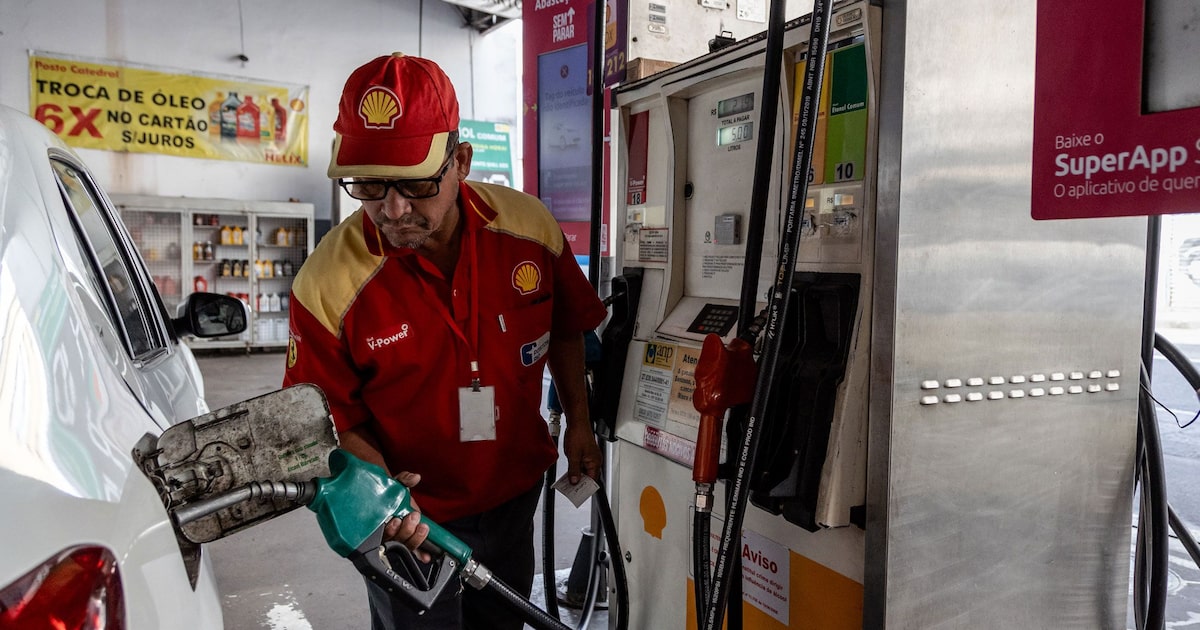
Brazil’s government is considering raising the mandatory ethanol blend in gasoline to 32% from the current 30%, in a move officials and market analysts say could help cushion consumers from higher fuel costs while supporting domestic biofuel producers.
Mines and Energy Minister Alexandre Silveira said on April 9 that the government intends to implement the higher blend in the first half of 2026, according to Bloomberg Línea. The proposed timetable is faster than many analysts had expected, especially because previous blend increases were preceded by lengthy technical testing and regulatory discussions.
The policy debate comes as global oil and refined fuel prices have come under pressure from the war involving Iran, raising concerns in Brazil over inflation and household fuel costs. Fuel prices are politically sensitive in the country, where transport costs quickly feed into broader consumer inflation.
Analysts cited by Bloomberg Línea said a higher ethanol content in gasoline would likely reduce costs for motorists because ethanol has historically been cheaper than gasoline in Brazil. The country has one of the world’s most developed biofuel markets, with a long-established system in which gasoline contains a mandatory share of ethanol and many cars can also run on hydrous ethanol sold directly at the pump.
The measure would also arrive at a useful moment for producers. Brazil’s sugar and ethanol sector has been dealing with heavy supply, tighter margins and growing competition between traditional sugarcane-based ethanol plants and newer corn ethanol facilities, which have expanded rapidly in recent years. Bloomberg Línea reported that Raízen, the country’s largest sugarcane ethanol producer, is also facing a debt crisis, adding to pressure across the sector.
Fresh crop data suggest supply should be sufficient to support a higher mandate. State food supply agency Conab said on April 17 that Brazil’s 2025-26 sugarcane harvest is expected to reach 673.25 million tonnes, slightly above its previous estimate, though still 0.5% below the prior season because of water stress, irregular rainfall and excessive heat. Conab estimated total ethanol production, including cane and corn ethanol, at 37.5 billion litres, up 0.8% from the previous crop and above its earlier projection.
That larger ethanol output is being driven in part by corn-based production, which has become an increasingly important part of Brazil’s fuel market. Bloomberg Línea cited market estimates that a higher gasoline blend could lift ethanol demand by about 800 million litres this year, helping reduce inventories by the end of the crop cycle and potentially improving prices paid to mills.
The broader sugar-energy mix will matter as well. Mills in Brazil’s Centre-South, the country’s main sugarcane belt, can shift cane between sugar and ethanol depending on margins. With sugar prices weaker, some producers have already been increasing ethanol output. The timing of a final government decision could therefore influence how much cane is directed into each product over the rest of the season.
Even so, one key uncertainty remains Petrobras’s gasoline pricing policy. Bloomberg Línea noted that the state-controlled oil company had not raised gasoline prices for distributors since the start of the Iran conflict. Because ethanol in Brazil competes both as a blend component and as a standalone fuel, the economics of any higher mandate will depend partly on whether gasoline prices move further.
For now, the government’s proposal signals that Brazil is leaning again on its mature biofuel industry as both an energy-security tool and an inflation-management instrument, while giving sugarcane and corn ethanol producers a larger guaranteed domestic market.
Sources: Bloomberg Línea; Forbes Brasil; Conab.