


A rising probability of El Niño in the second half of 2026 is increasing concern across Latin America, with Brazil among the countries most exposed because of its size, farm output and reliance on weather-sensitive energy and logistics. According to Bloomberg Línea, citing the US National Oceanic and Atmospheric Administration, the odds of El Niño developing in the May to July quarter rose to 61%, up from an earlier 50% forecast.
The World Meteorological Organization (WMO), however, said it is still too early to confirm that current conditions will turn into a strong event. Bárbara Tapia Cortés, a meteorologist and technical coordinator at the WMO, told Bloomberg Línea that the most responsible description for now is a growing risk, not a certainty. This article is based on single-source reporting from Bloomberg Línea.
Uneven Regional Risks
If El Niño does take hold, the effects are expected to vary sharply across the region. On the Pacific coasts of Peru and Ecuador, the pattern is often associated with intense rain, floods and landslides. In Central America's Dry Corridor and parts of northern South America, it tends to bring rainfall deficits, agricultural drought, heat waves and water stress.
Brazil could face both extremes at once. Bloomberg Línea reports that the Amazon, northern Brazil and the Pantanal are most vulnerable to scarce rainfall, high temperatures, fires and low river levels, patterns that have already intensified in recent years. By contrast, southern Brazil, along with Uruguay, Paraguay and northeastern Argentina, is more likely to see above-average rainfall, raising the risk of floods, waterlogged fields and transport disruptions.
Yedda Monteiro, an intelligence and strategy analyst at agribusiness consultancy Biond Agro, told the outlet that southeastern and central-western Brazil could also face more heat and delayed planting because of irregular rainfall.
Pressure on Farms and Prices
Agriculture is one of the sectors most exposed to climate shocks in Latin America. The WMO says El Niño can disrupt planting calendars, reduce soil moisture in some areas, cause flooding in others and increase heat stress on crops and livestock. Bloomberg Línea says the farm sector absorbs roughly 26% of climate-disaster damage in the region, rising to as much as 82% in drought episodes.
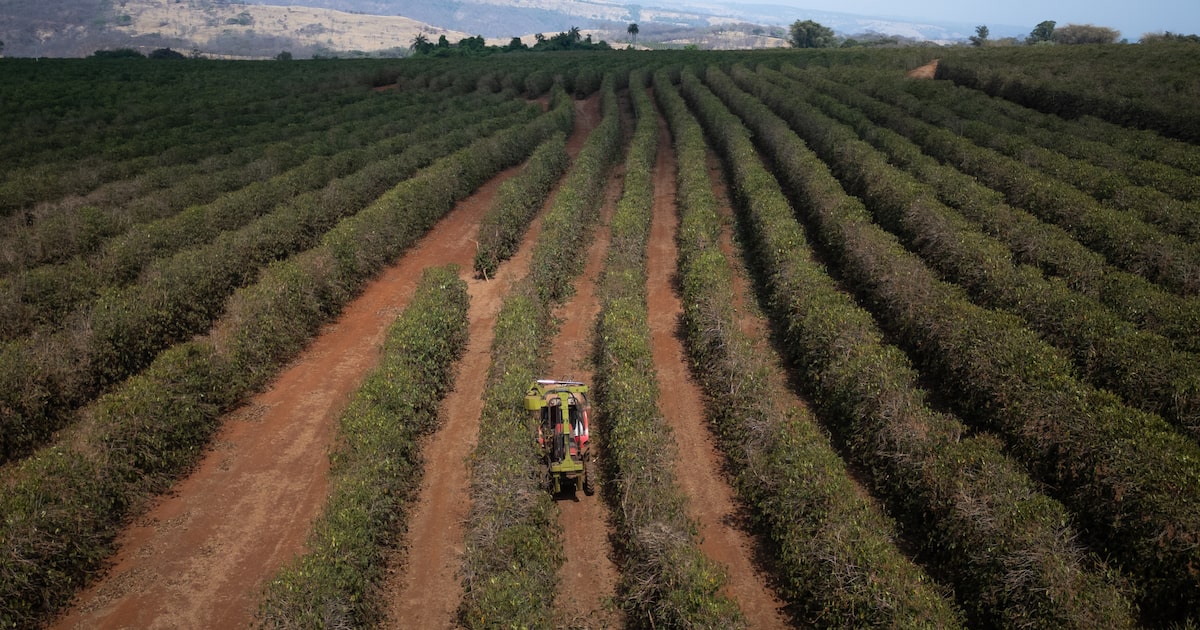
The most vulnerable crops vary by sub-region, but the report highlights soybeans, corn and beans, along with rice, coffee, cocoa, sugar cane, pastureland and cattle. For Brazil, that matters well beyond the countryside. Lower yields, weaker crop quality, delayed fieldwork and transport bottlenecks can all feed into higher food prices and slower economic growth.
Brigitte Castañeda, a researcher in energy and climate risk at the University of the Andes in Colombia, said previous studies suggest GDP in Andean countries could fall by 0.6 to 1.7 percentage points in a severe El Niño scenario. The broader regional concern is similar: weaker farm output, more emergency public spending and less tax revenue arriving at the same time.
Energy and Fiscal Strain
The energy system is another weak point. Latin America gets about half of its electricity from hydropower, according to the report, leaving several countries exposed when drought cuts river flows and reservoir levels. In those cases, utilities often have to rely more heavily on thermal generation, which is usually more expensive and more carbon-intensive.
That risk extends to Brazil, one of the region's major hydro-dependent systems. If dry conditions hit key river basins while heat drives up electricity demand for cooling, power costs could rise alongside food inflation. The article also notes wider logistical vulnerabilities, including potential shipping difficulties linked to the Panama Canal.
The main message from meteorologists, energy officials and agribusiness analysts is not that a major El Niño is guaranteed, but that the window for preparation is already open. They argue that governments and producers should update risk scenarios, strengthen seasonal monitoring, review water and power contingency plans, expand farm insurance and adapt planting and drainage strategies before the weather threat becomes a full economic shock.