


A Brazilian federal program created to strengthen state presence in remote Amazon border areas has directed most of its recent money to a small group of municipalities, including better-off cities, while poorer towns have received little or nothing, according to an audit by Brazil’s Federal Court of Accounts (TCU) and reports by Folha de S.Paulo.
The Calha Norte Program was created in 1985 under military rule to support frontier regions with infrastructure, equipment and security-related projects. It began with 74 municipalities. It now covers 783, after 589 were added between 2016 and 2022, according to Folha and the TCU findings summarized by Conjur.
Uneven Distribution
Folha reported that more than R$4.5 billion (roughly USD 800 million at recent rates) was distributed through Calha Norte between 2015 and 2024. Of that total, 80% went to only 10% of the municipalities served by the program, while 2.5% of localities received half of all transfers.
The pattern did not consistently favor the most deprived areas. Municipalities with high or medium scores on Brazil’s Human Development Index were covered in almost 70% of cases, Folha reported. Cities with low or very low HDI received coverage in just over one-third of cases.
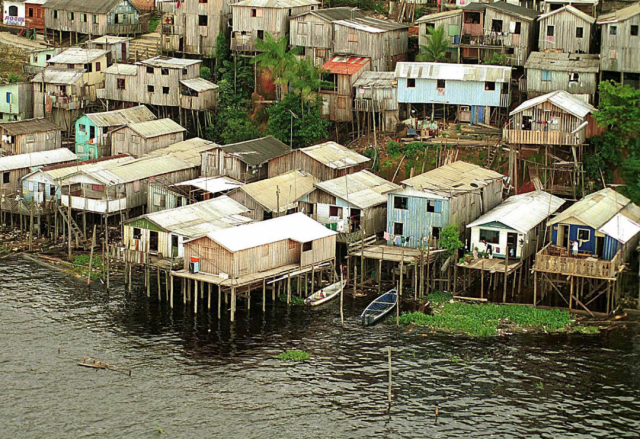
Melgaço, in Pará state, illustrates the gap. Folha described the municipality, which has Brazil’s lowest HDI, as facing visible public-service failures, including an open-air dump and widespread poverty in riverside housing. According to the reports, Melgaço had no Calha Norte agreement in the period analyzed.
Political Earmarks
The contrast is visible downstream in Macapá, the capital of Amapá state, about 250 km (155 miles) from Melgaço by river route. Folha reported that the city received major Calha Norte-funded investments, including renovation of a tourist pier with an electric tram, in the political base of Senate President Davi Alcolumbre, a member of União Brasil from Amapá.
A separate report by Mara Paraguassu, citing Folha’s data, said Macapá received R$373.2 million through 160 agreements, while Boa Vista, the capital of Roraima, received R$414.9 million through 88 agreements. Folha reported that after the Macapá pier works were completed at the end of 2024, Alcolumbre’s social media accounts promoted the role of his congressional earmarks in financing the project.
CNN Brasil separately reported that Alcolumbre directed R$71.1 million in 2024 directly to municipal governments in Amapá’s interior, based on Siga Brasil, the federal budget-tracking system maintained by the Senate. The report said 15 of Amapá’s 16 municipalities received his earmarks, excluding Macapá, whose mayor is a political rival. CNN said it sought comment from Alcolumbre’s office and received no response.
Audit Criticism
The TCU audit, discussed in a November 2025 session and reported by Conjur, found broader governance problems in Calha Norte. The court cited vague objectives, weak legal foundations, a lack of clear and measurable goals, ineffective monitoring and poor evaluation of whether projects improved conditions for beneficiaries.
The audit also criticized the program’s expansion, saying it moved quickly and without clear technical criteria. Conjur reported that almost half of the municipalities now included had received no agreements since 2009. Folha also reported that 21% of municipalities in Brazil’s border strip, the program’s original strategic focus, had not been served.
Brazil’s Defense Ministry, which was responsible for Calha Norte until early 2025, told Folha that infrastructure works through 2024 were financed entirely through congressional earmarks and that lawmakers had the prerogative to choose beneficiary municipalities and projects. The ministry said the Calha Norte department was responsible for document analysis, execution monitoring, inspections and demands for accountability, not for prioritizing municipalities by socioeconomic indicators.
The Chamber of Deputies told Folha that questions about why municipalities were chosen should be directed to the authors of the earmarks, federal budget rapporteurs and party leaders on Congress’s joint budget committee. Folha said the Senate presidency and press office did not comment.