


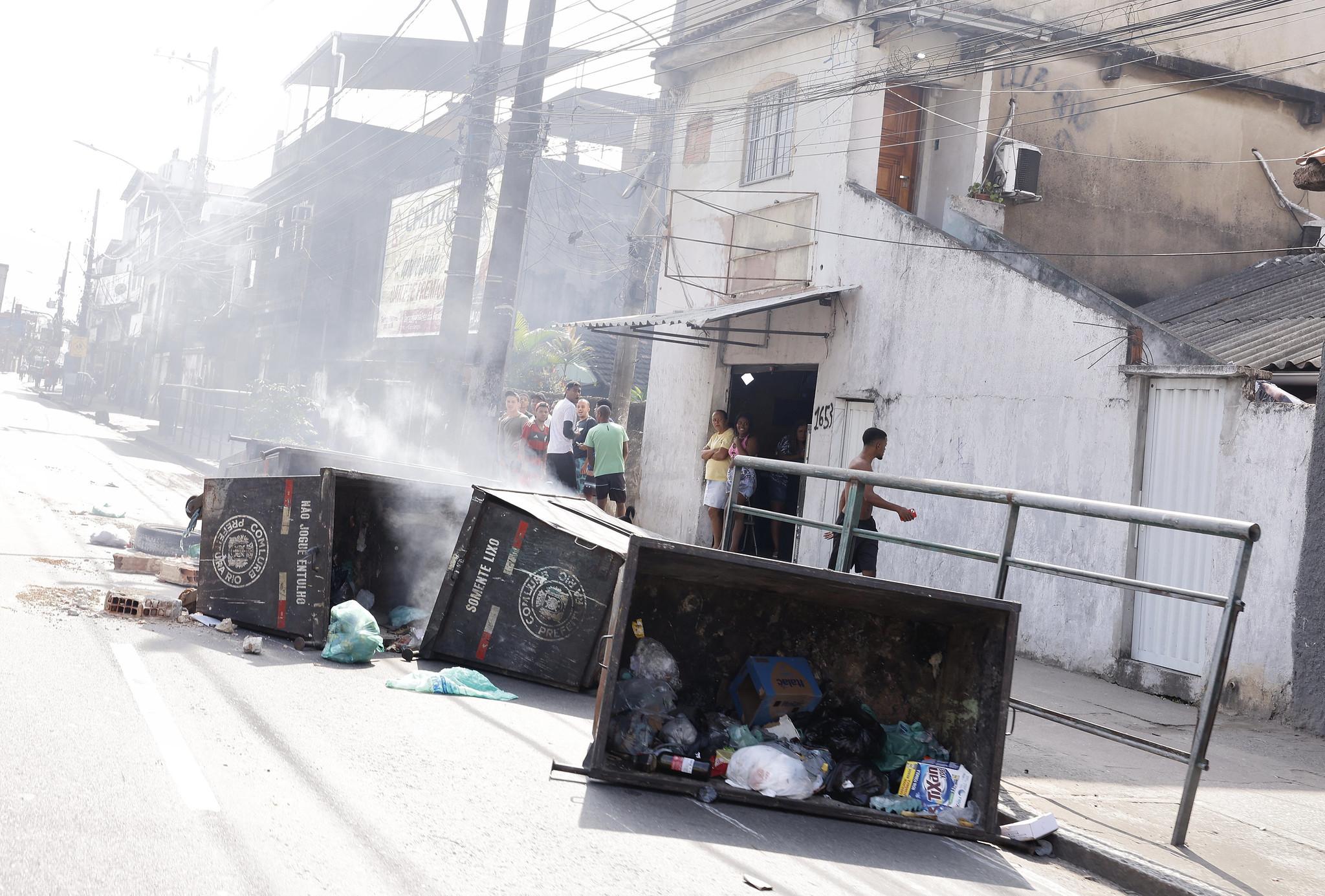
Violence has become the leading concern of Brazilian voters. Brazil’s presidential hopefuls, however, are not yet campaigning as if they believe it.
A Genial/Quaest poll released on April 15 found that 27% of Brazilians named violence as the country’s main problem, ahead of corruption at 19%, social problems at 16%, health care at 14%, the economy at 9% and education at 7%. The survey, conducted from April 9 to 13 with 2,004 voters aged 16 or older, has a margin of error of two percentage points and a confidence level of 95%, according to Gazeta do Povo.
The finding is not an isolated spike. Gazeta reported that violence has led Genial/Quaest’s historical series on voters’ concerns since the beginning of 2025, peaking near 40% in November. The timing coincides with the expansion of criminal factions across Brazil, a continental country where public security is formally shared among federal, state and local authorities but where citizens experience the failure in the same place: on the street, at work, in schools, hospitals and public transport.
Brazil’s two best-known criminal groups, Primeiro Comando da Capital, or PCC, and Comando Vermelho, or CV, began in the prison system and expanded into drug trafficking, territorial control and illicit markets. They are no longer the only threat. Gazeta cited a confidential survey by the National Secretariat for Penal Policies’ prison intelligence directorate that identified 88 criminal factions spread across all Brazilian states.
Yet the leading names in the early 2026 presidential race have spent recent weeks emphasizing other subjects. President Luiz Inácio Lula da Silva, of the left-wing Workers’ Party, has focused public messaging on the economy, social programs, household debt, inflation, health care, education, the Pix instant-payment system and labor issues, according to Gazeta’s review of his recent posts and statements.
Lula last addressed public security on Instagram on March 24, Gazeta reported, in a video about the sanctioning of an anti-faction law approved after negotiations between the government and Congress. Since then, the subject has largely disappeared from his public messaging, even after the federal government had signaled it might use major Federal Police operations against organized crime as part of its political agenda.
The opposition has not filled the gap. Senator Flávio Bolsonaro, a member of the right-wing Liberal Party and son of former president Jair Bolsonaro, last addressed the subject on March 14, according to Gazeta. He accused Lula’s government of lobbying in the United States against classifying the PCC and CV as terrorist organizations, a designation Washington has not made. The senator has since moved on to other themes.
Ronaldo Caiado, the governor of Goiás and a centre-right presidential hopeful, has more direct security credentials than most national contenders. Gazeta noted that he can point to significant reductions in crime during his two terms as governor. Even so, the newspaper reported that he last posted about violence or public security on March 31, when he said giving police the conditions to work was a way to protect law-abiding citizens.
The result is a striking mismatch. Voters are telling pollsters that crime is their central fear. Politicians are treating it as one item in a crowded communications calendar.
That mismatch has a cost. In a country the size of Brazil, tolerance of criminal power does not remain local for long. Factions that dominate poor urban areas can spread through prisons, ports, fuel distribution, contraband routes and informal markets. When the state responds slowly, citizens pay twice: first through direct violence, then through the erosion of ordinary economic and civic life.
Brasil Paralelo, a conservative media company, used the same public anxiety to promote a forthcoming documentary on El Salvador, where President Nayib Bukele’s government has sharply reduced violence through emergency powers, mass arrests, the deployment of security forces and large high-security prisons. The outlet also noted criticism from groups such as Cristosal, which accuse the Salvadoran government of repression and democratic backsliding, allegations the government denies.
El Salvador is not Brazil. It is far smaller, more centralized and politically different. Its model cannot be copied mechanically by a federal country of more than 200 million people with powerful state governments, complex courts and entrenched criminal networks. But its example has entered Brazil’s debate because it speaks to a simple public demand: voters want order, and they want leaders to treat security as a governing priority rather than a campaign slogan.
For Brazil’s 2026 contenders, the political risk is clear. Candidates may prefer to talk about inflation, debt relief, foreign affairs or institutional disputes. But millions of Brazilians are asking a more basic question: who will stop criminals from deciding how citizens live?