


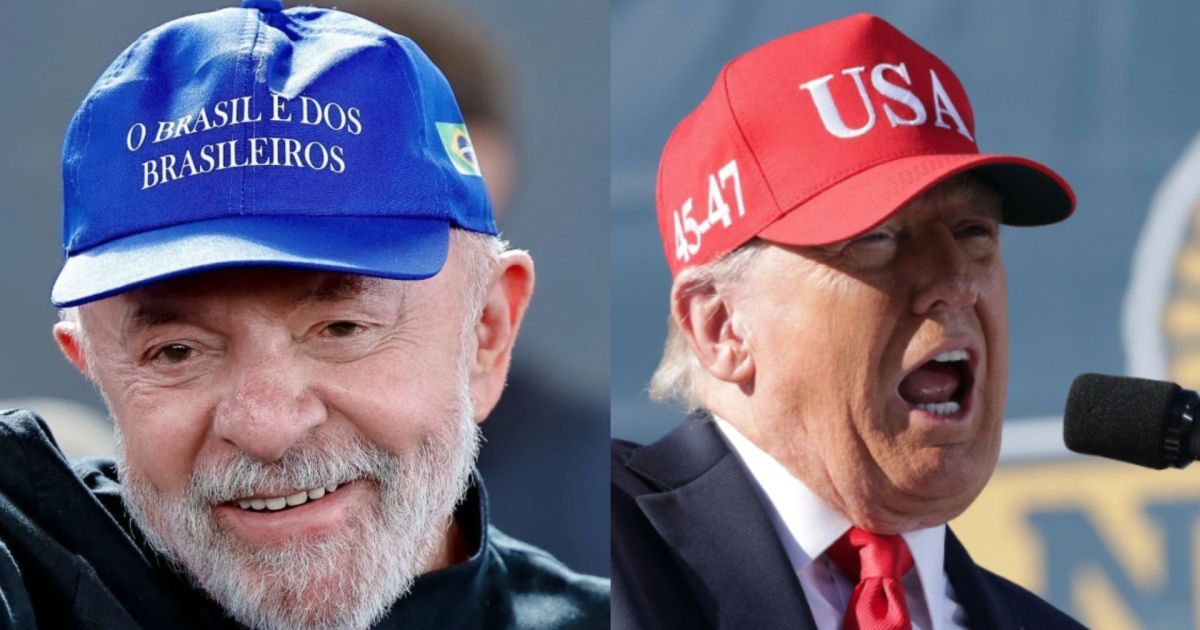
President Luiz Inácio Lula da Silva’s recent criticism of US President Donald Trump appears to be helping him politically at home, but the harder line is also exposing Brazil to new diplomatic and economic risks as relations with Washington grow more strained.
According to CNN Brasil, Lula’s tougher tone during a visit to Portugal gave fresh momentum to the Planalto Palace’s public messaging after a period of weak approval ratings. The report said Lula’s opposition to new US tariffs and his broader confrontation with Trump-linked pressure helped create a more favorable domestic narrative for the government.
But that political gain comes at a sensitive moment. CNN Brasil cited concerns inside Brazil’s diplomatic establishment that escalating rhetoric toward the White House could complicate talks on strategic minerals and rare earths, sectors seen as increasingly important in the global technology race and in the wider US-China dispute. The report also pointed to the risk of renewed US tariffs on Brazilian goods, even if on a smaller scale than earlier measures.
Security cooperation has become another source of friction. CNN Brasil said Brazil and the United States are in talks on combating organized crime in Latin America, while Washington is weighing tougher classifications for criminal groups active in the region. Any abrupt shift by the US could leave Brazil in a more vulnerable diplomatic position.
Metrópoles reported a parallel dispute over how the Lula government publicly described recent contacts with US authorities. According to the column, US officials privately viewed as exaggerated two Brazilian announcements presented as signs of closer bilateral cooperation.
The first involved an April 10 meeting with Finance Ministry official Dario Durigan, federal police chief Andrei Rodrigues and tax chief Robinson Barreirinhas on expanding remote inspection at the Port of Santos. Metrópoles reported that US representatives discussed a letter of intent, but that no document was signed. Even so, Brazilian officials later announced what they described as the formalization of cooperation with the US to combat arms and drug trafficking, a claim that, according to the report, surprised Washington because US officials did not consider a new agreement to have been reached.
A second dispute followed the detention in Florida of former congressman Alexandre Ramagem. Metrópoles said the Lula government publicly described the move by US Immigration and Customs Enforcement, or ICE, as a product of international cooperation, which again caused discomfort in Washington. The report said US officials then reviewed the circumstances of the detention. Ramagem was later released and remains in the US.
The diplomatic fallout escalated further when the US government announced on April 20 that it had requested the departure of Marcelo Ivo de Carvalho, a Brazilian federal police liaison officer working with ICE. In a statement cited by Metrópoles, the US State Department’s Bureau of Western Hemisphere Affairs said no foreign official could manipulate the American immigration system to bypass formal extradition requests or extend political persecution onto US territory.
Taken together, the episodes suggest that Lula’s confrontation with Trump may yield short-term political benefits inside Brazil, especially by projecting firmness against perceived US pressure. But they also show how quickly domestic messaging can collide with the practical demands of foreign policy. At a time of trade uncertainty, strategic-minerals competition and delicate security negotiations, even symbolic disputes with Washington may carry real costs.
Source reporting draws on CNN Brasil and Metrópoles. Metrópoles is a single-source column based on conversations with US government officials.