


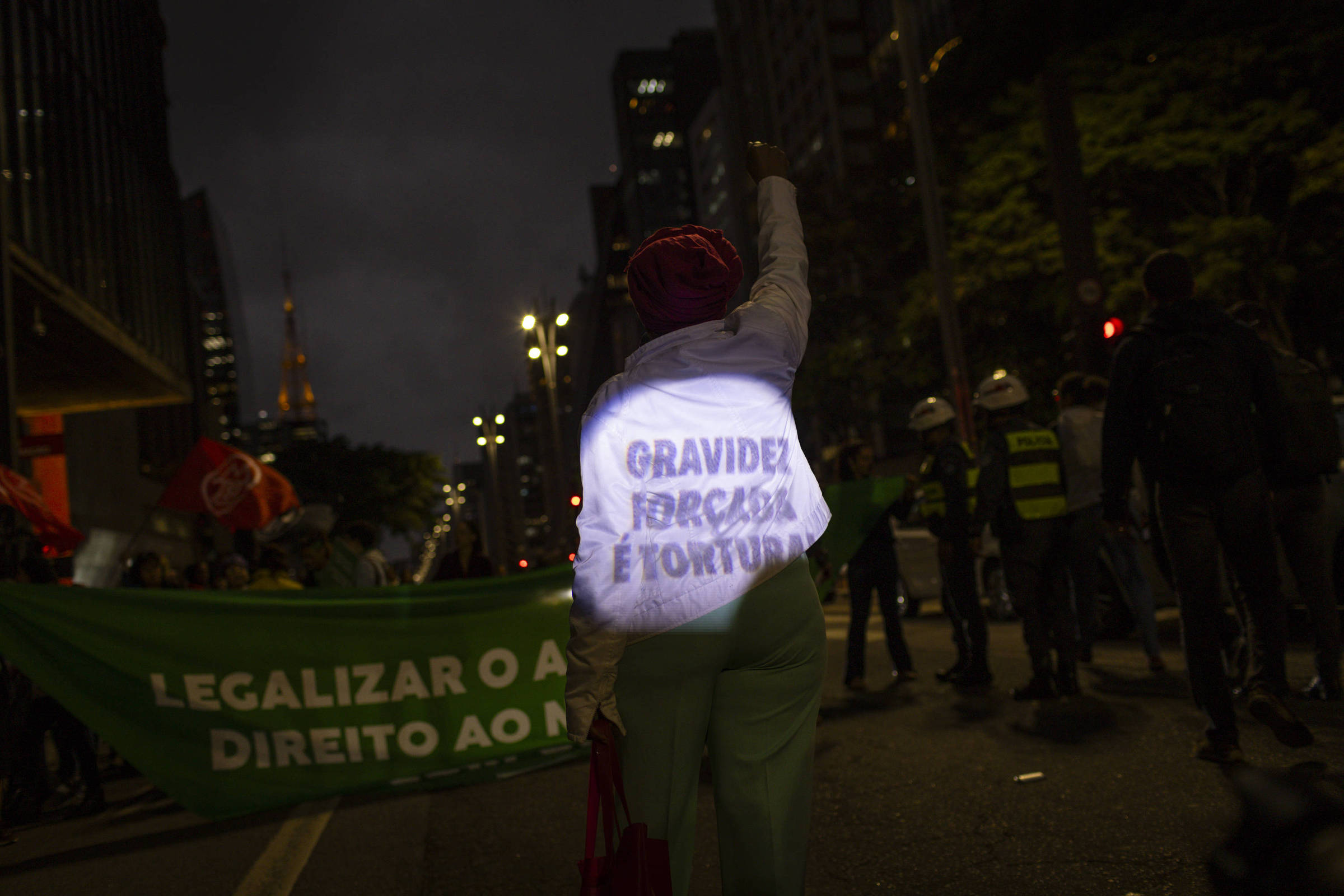
Brazil’s Superior Court of Justice (STJ), one of the country’s highest courts for non-constitutional federal law, unanimously ended a criminal case against a woman accused of self-induced abortion after finding that the investigation began with an illegal breach of medical confidentiality.
The case took place in Mauá, a city in greater São Paulo. According to Folha de S.Paulo, the woman was five months pregnant when she sought care at a public hospital after taking abortion medication and becoming ill. The criminal proceedings are under judicial secrecy.
How the Case Began
Folha reported that the fetus was later found in a wardrobe at the woman’s home. The doctor who treated the patient called police and told officers what had happened. Police then went to the residence, collected the fetus and opened the investigation that led to the criminal charge.
São Paulo’s state court had previously accepted the doctor’s conduct, saying the existence of a fetus in the patient’s home justified notifying authorities. The STJ’s Sixth Panel rejected that view and held that the doctor could not report information obtained during medical care, except in narrow situations provided by law.
The court applied the doctrine known in Brazilian law as the “fruits of the poisoned tree,” under which evidence derived from an initial illegality is also tainted. In this case, that meant the police visit, seizure of the fetus and later criminal case could not stand if they depended on the doctor’s unlawful disclosure.
A Broader Legal Rule
The decision follows earlier STJ rulings on abortion investigations and professional secrecy. In a 2023 case, also before the Sixth Panel, the court closed a prosecution for the crime of abortion caused by the pregnant woman herself, defined in Article 124 of Brazil’s Penal Code, after finding that a doctor had called police and later sent the patient’s medical records to investigators.
In that decision, Justice Sebastião Reis Júnior cited Article 207 of Brazil’s Code of Criminal Procedure, which bars testimony from professionals required to keep secrets because of their work, unless the protected person authorizes disclosure. He also cited Brazil’s Medical Ethics Code, whose Article 73 prohibits doctors from revealing information that could expose a patient to criminal prosecution.
Legal commentary cited by Migalhas says the STJ had previously been divided on the issue. Its Fifth Panel had accepted, in a 2019 case, that suspected abortion could justify disclosure. Later decisions by the Sixth Panel moved in the opposite direction, and a 2024 Fifth Panel ruling aligned with that view by treating disclosure to police as an unjustified breach of medical secrecy.
Public Health and Inequality
The São Paulo Public Defender’s Office, which represented the patient in the Mauá case, said the ruling also exposes a social inequality. Defender André Alvino Pereira Santos told Folha that poor women who rely on Brazil’s public health system, known as SUS, are more exposed to criminalization in emergencies than patients with more money who can access private care with greater confidentiality.
The STJ did not use the habeas corpus case to decide whether Brazil’s abortion crime is constitutional. In the 2023 ruling, the court said that issue belongs in a separate constitutional case still pending before Brazil’s Supreme Federal Court (STF), the country’s top constitutional court.
For now, the practical effect is narrower but significant: when an abortion investigation starts because a doctor reported a patient based on information learned during treatment, the evidence may be unlawful, and the criminal case may be closed.