


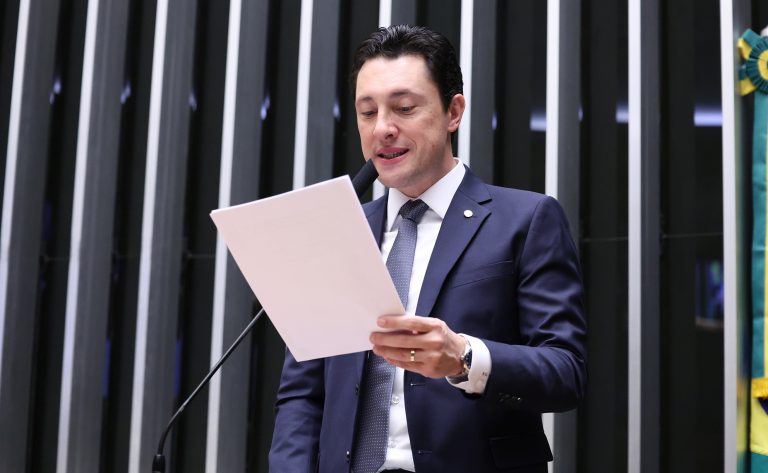
Brazil’s lower house has approved a bill that would soften financial penalties on political parties, limit election-court oversight and allow registered campaign messaging channels months before the 2026 elections.
The Chamber of Deputies passed the proposal on May 19 after fast-track proceedings. According to Folha de S.Paulo, the text was voted on less than three hours after its first reading and approved by 367 votes to 86. G1 reported that the final digital version was made available only hours before the vote, that most lawmakers remained silent during the session and that only four deputies spoke against the proposal in plenary.
The bill now goes to the Senate, where several provisions face resistance. Critics say the measure would weaken Brazil’s Electoral Justice system, the branch of the judiciary that oversees parties, campaign finance and elections. Supporters argue it gives parties more legal certainty and prevents penalties from crippling local chapters or newly merged organizations.
The proposal changes Brazil’s Political Parties Law. It caps fines for rejected party accounts at R$30,000, replacing a rule that can set fines at up to 20% of the disputed amount. It also lets parties pay debts over as long as 180 months, or 15 years, and reduces the deadline for election courts to examine party accounts to three years. If that deadline passes, the case would expire.
The text also bars the seizure or blocking of money from the Party Fund and the Special Campaign Financing Fund, Brazil’s main public sources of party and campaign money, during the six months before an election. It states that national party bodies should not automatically bear penalties imposed on state or municipal branches, a point the Chamber’s official news service said incorporates a 2021 Supreme Federal Court understanding on the legal separation of party branches.
Another disputed provision would allow parties, officeholders and candidates to register official mobile numbers with the Electoral Justice for campaign and party communications. Messages sent from those numbers to previously registered recipients would not be treated as mass messaging, even if sent through automated systems or bots, provided recipients can opt out. Messaging platforms could block those numbers only by court order.
That clause has drawn particular criticism because Brazil’s election authorities have tried to curb mass political messaging and disinformation since the 2018 election cycle. President Luiz Inácio Lula da Silva has said he would veto the messaging provision if it survives the Senate. Gazeta do Povo reported that senators including Eduardo Braga and Renan Calheiros, both from the MDB, have criticized the bill, with Calheiros saying it could operate as an amnesty for parties seeking to reduce past financial penalties.
Legal specialists cited by Folha said parts of the bill may not apply to the 2026 elections because of Brazil’s constitutional one-year rule for changes that affect the electoral process. The principle generally prevents new electoral rules from applying to elections held within a year of their enactment. Luiz Eduardo Peccinin, an electoral lawyer and professor cited by Folha, said provisions tied directly to campaign conduct, such as the messaging rule, are examples of changes that may fall under that restriction.
The bill also says several changes would take immediate effect, including in ongoing cases and, in some situations, cases already closed. Specialists warned that retroactive application could raise constitutional questions, especially where final judgments are involved.
Rodrigo Gambale, the Podemos deputy who reported the bill, defended the proposal as a way to modernize party management and align oversight rules with proportionality and reasonableness. Alexandre Bissoli, a lawyer who represented parties in discussions on the text, told G1 that the messaging provision was meant to regulate communication with party members and voters through identifiable official numbers, not to encourage illegal mass messaging.
Opponents in the Chamber said the bill shields parties from accountability while they rely heavily on public money. Deputies from Novo, Missão and PSOL criticized the lack of open defense of the text during debate and argued that the bill weakens the Superior Electoral Court’s ability to enforce campaign-finance rules.
The Senate can approve, reject or amend the proposal. If senators change the text, it must return to the Chamber before going to the president.