
Brazilian investigators are widening their scrutiny of the Primeiro Comando da Capital (PCC), Brazil’s largest prison-born criminal faction, after a new phase of Operation Carbono Oculto targeted fintechs suspected of laundering money for organized crime.
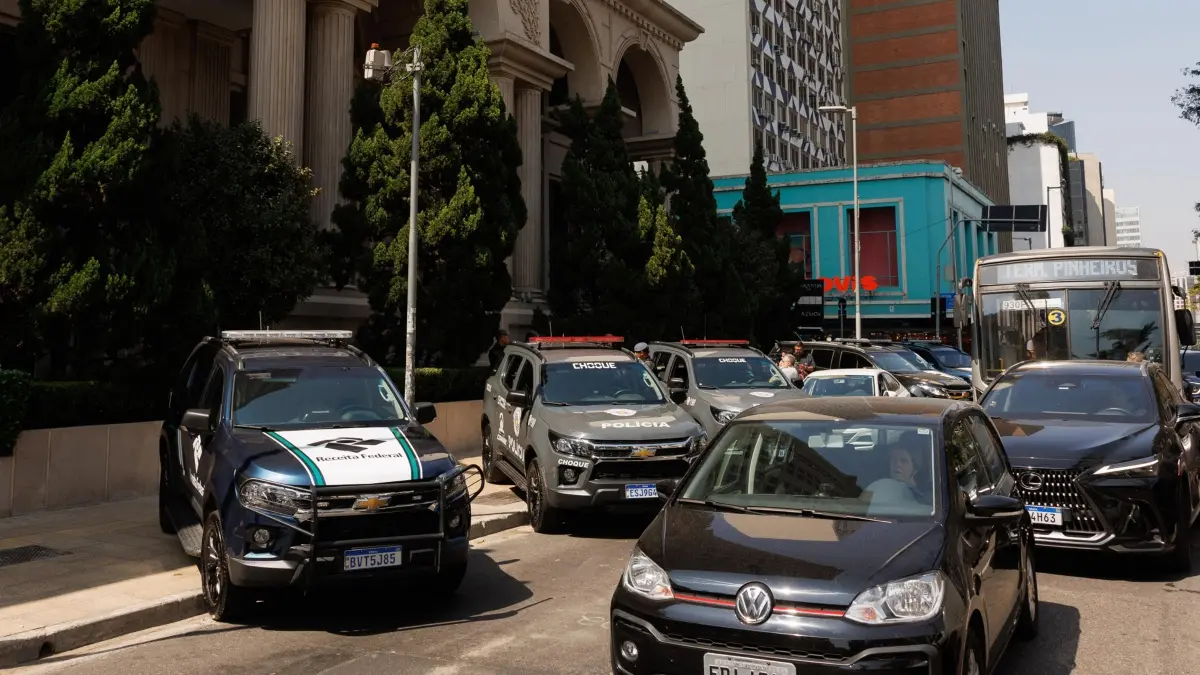
The São Paulo State Public Prosecutor’s Office (MPSP) and Brazil’s Federal Revenue Service launched the operation on May 28 in São Paulo and four other states. Authorities say intelligence reports point to almost R$26 billion, roughly USD 5.2 billion at recent rates, in suspicious transactions involving six payment institutions.
A Financial Front
The inquiry centers on whether fintechs functioned as “parallel banks” for the PCC, moving money from fuel stations, distributors, shell companies and investment funds while obscuring the true owners of the funds. G1 reported that searches reached buildings on Faria Lima Avenue, São Paulo’s main financial district, as well as addresses in Rio de Janeiro, Paraná, Minas Gerais and Mato Grosso do Sul.
Investigators say the scheme relied on so-called pooled accounts, in which a payment institution deposits money from several clients into one account held at a traditional bank. Prosecutors argue that this structure made it harder to identify the origin, destination and beneficiaries of the money.
“Six fintechs were uncovered that moved R$26 billion,” Federal Revenue Secretary Robinson Barreirinhas said, according to G1. He said one of them moved more than R$1 billion, about USD 198 million, in cash, “which should not even be possible” for a fintech.
The Federal Revenue Service also reported R$365 million, about USD 72 million, in suspicious cryptoasset transactions linked to organizations investigated in other cases, according to Gazeta do Povo.
Fuel and Shell Firms
The new phase, called Operação Fluxo Oculto, is an offshoot of Carbono Oculto, launched in August 2025 to investigate alleged PCC involvement in the fuel sector. Authorities say the group continued operating after the first raids, opening companies under the names of front men, including homeless people and convicted prisoners.
A second front of the inquiry focuses on fuel adulteration. Prosecutors and Brazil’s National Agency of Petroleum, Natural Gas and Biofuels (ANP) say solvent producers issued false invoices to shell companies, while naphtha, a petroleum derivative, was diverted and mixed with gasoline.
G1 reported that one company allegedly issued more than 10,000 false invoices. The suspected fuel fraud is estimated at R$4 billion, or about USD 790 million. ANP official Júlio Nishida said investigators identified more than 2.5 million liters of gasoline adulterated with naphtha that could otherwise have reached consumers.
CNN Brasil reported that the operation also targeted four investment funds, two asset administrators and two asset managers. Prosecutors said the four funds had assets of about R$205 million, roughly USD 41 million, and had grown by more than 200% in just over a year.
An International Network
Folha de S.Paulo reported that the PCC’s move into more sophisticated financial structures followed its expansion beyond local retail crime. Prosecutors say the faction’s internationalization became clear in Operation Sharks, launched in 2020, which mapped drug routes from Paraguay and Bolivia toward European markets.
Mário Sarrubbo, São Paulo’s former attorney general and former national public security secretary, told Folha that Brazil had long treated public security as a state-level issue even as organized crime crossed borders. He said Brazil had become a drug transshipment hub because of its vast land borders and weak enforcement capacity.
The maritime route has also raised the importance of ports, especially Santos, Latin America’s largest port, on the São Paulo coast. Folha said investigators view the Baixada Santista region around Santos as central to the PCC’s influence because of its proximity to export logistics.
Regulatory Pressure
The case arrives days after the United States classified the PCC and Comando Vermelho, a Rio de Janeiro-based criminal faction, as terrorist organizations. Folha reported that anti-money-laundering controls in Brazil’s financial system are now part of the debate over the U.S. designation.
Since August 2025, fintechs have had to follow the same tax-reporting rules as banks, according to G1. The Federal Revenue Service said that change helped identify the six new payment institutions now under scrutiny.
CNN named several companies as targets of the operation, including Ceopag, America Payment, Sispay, Smart Solutions, YAW and Ello Gestora. YAW said it has no ties to criminal organizations and maintains compliance controls. Ceopag said it is cooperating with authorities and denied that any irregularity by third parties can automatically be attributed to the company.
No final court ruling has been reported in the cases described by the sources. The investigations remain active.