

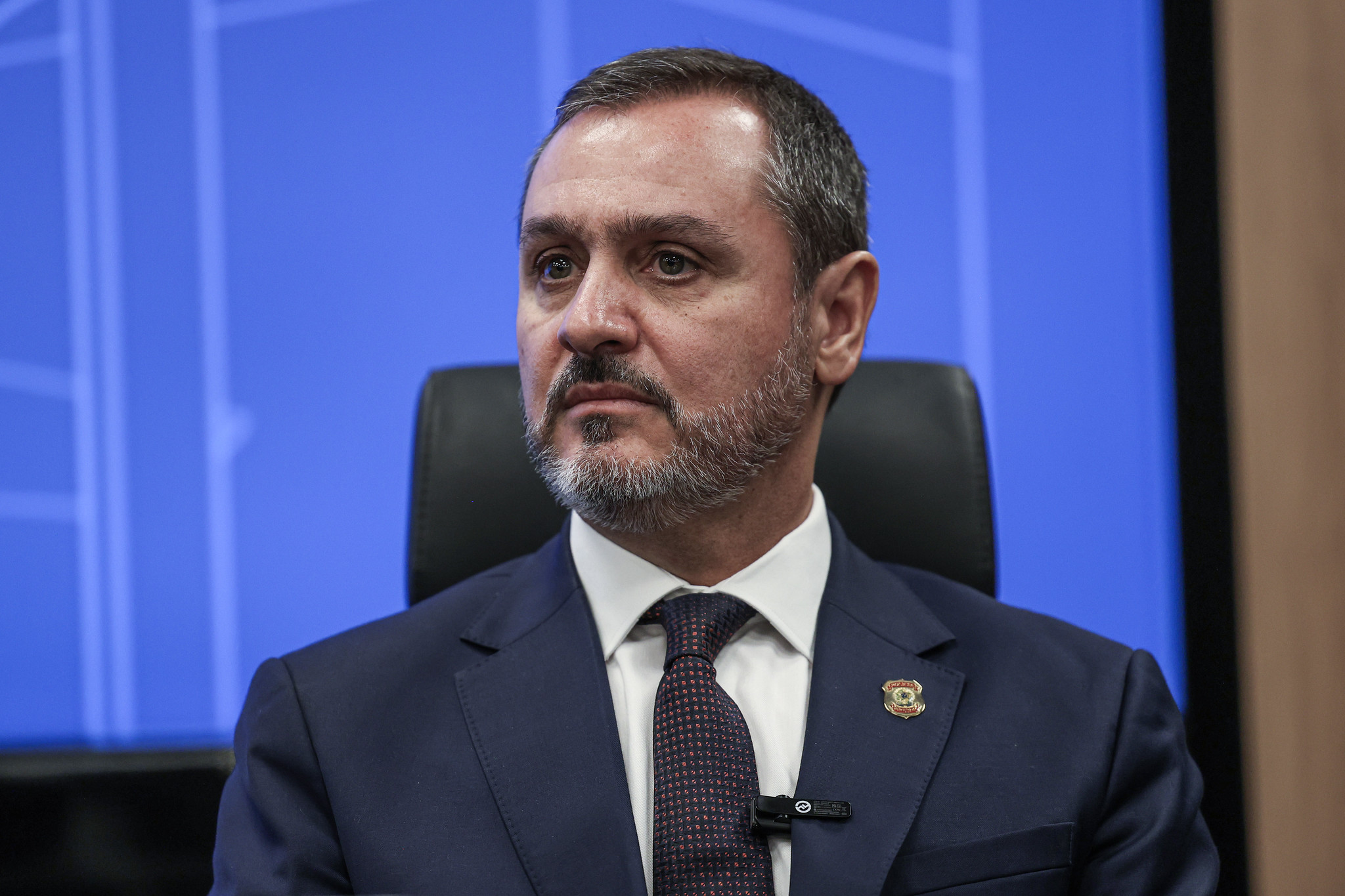
Brazil’s Federal Police director-general, Andrei Rodrigues, criticized the United States’ decision to classify two major Brazilian criminal factions as terrorist organizations, calling the move a mistake in an interview with TV Globo, according to single-source reporting from Gazeta do Povo.
The US measure targets Primeiro Comando da Capital (PCC) and Comando Vermelho (CV), two of Brazil’s most powerful organized-crime groups. Gazeta do Povo reported that the decision was announced in late May and formally took effect on Friday, June 5, 2026.
Why Brasília Objects
Rodrigues argued that terrorism and organized crime require different legal and policing strategies. He said terrorist groups have ideological motives, while organized crime, even when it terrorizes communities, seeks profit.
“This definition [as terrorists] is a mistake, because the strategy to confront one group is different from the strategy to confront the other,” Rodrigues said, according to Gazeta do Povo.
The Federal Police chief said the US classification would have no influence on Brazil’s domestic crime-fighting policies. His comments reflect a recurring distinction in Brazilian public security debates: criminal factions may use extreme violence and control territory, but authorities often frame them as profit-driven networks rather than ideologically motivated movements.
A Possible Opening
Despite the criticism, Rodrigues said the US decision could create room for broader cooperation between Brasília and Washington. He pointed to intelligence sharing, efforts to block weapons shipments to Brazil and the arrest of fugitives from Brazilian justice who are in the United States.
That point matters because Brazil’s criminal factions have long been linked to prison networks, drug trafficking, arms smuggling and territorial disputes. The PCC emerged in São Paulo’s prison system, while Comando Vermelho has deep roots in Rio de Janeiro’s criminal underworld. Both acronyms are widely known in Brazil, but they are less familiar to international readers than cartels in Mexico or Colombia.
Rodrigues’ position, as reported, is therefore twofold: he rejects the terrorism label as analytically wrong, but sees practical value if the designation increases US cooperation against Brazilian criminal networks.
Diplomatic Friction
Gazeta do Povo also connected the issue to recent tension between Brazil and the United States over law-enforcement cooperation. In April, the administration of US President Donald Trump expelled Federal Police delegate Marcelo Ivo de Carvalho from his post as liaison officer in Miami.
According to the report, Carvalho was accused of trying to manipulate the US immigration system to accelerate the repatriation of Alexandre Ramagem, a former federal deputy from the Liberal Party (PL-RJ), a right-wing party associated with former President Jair Bolsonaro’s political camp.
Ramagem had been detained in the United States and later released, Gazeta do Povo reported. The outlet said he was sentenced to 16 years in prison over an alleged coup attempt and left Brazil before the end of the trial in September 2025. He has since lived in Miami with his family.
Brazil has requested Ramagem’s extradition. Gazeta do Povo reported that Supreme Federal Court Justice Alexandre de Moraes closed the case on November 25 and declared Ramagem a fugitive.
Brazil responded to the Miami episode by withdrawing the credentials of a US immigration officer assigned to Federal Police headquarters in Brasília, though that measure was later revoked. The Foreign Ministry, known as Itamaraty, also canceled the credentials and visa of another US agent working in Brazil, who returned to the United States.