


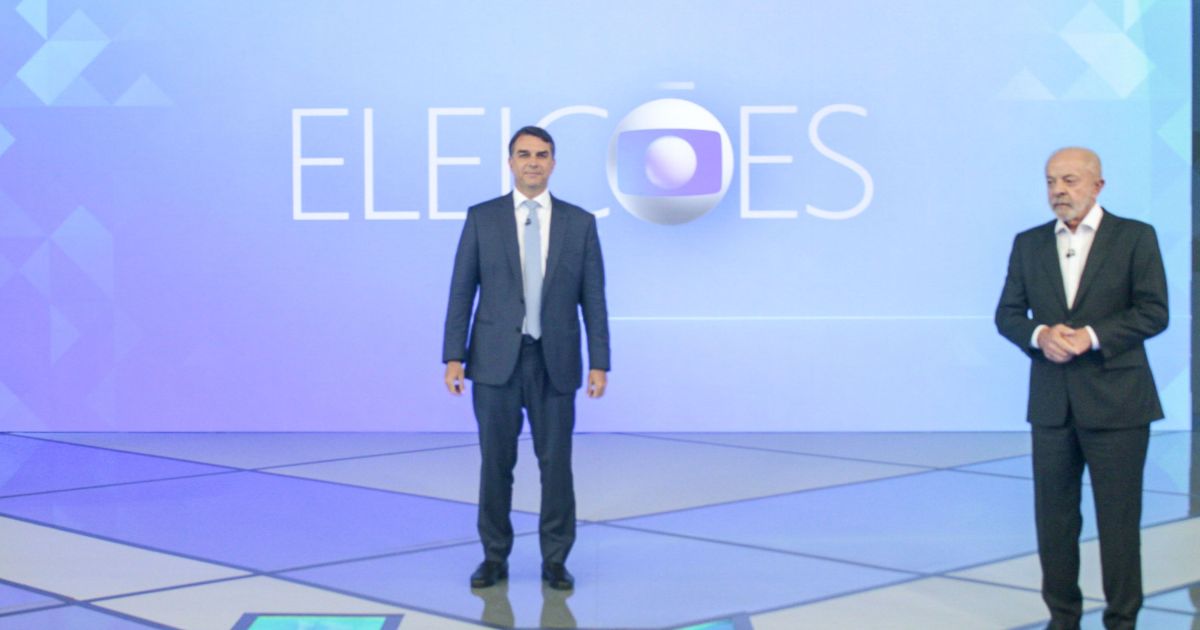
Photo: Jovem Pan.
President Luiz Inácio Lula da Silva and Senator Flávio Bolsonaro faced each other in the final televised debate before Brazil’s Oct. 25 presidential runoff. TV Globo aired the debate on the evening of Oct. 23, two days before voting. Coverage described a four-block format, with themed and open-topic rounds, followed by closing statements.
The candidates used the broadcast to make closing arguments and contest each other’s records and proposals. Jovem Pan’s report highlighted Flávio’s support for a zero-fare public transport proposal and recorded exchanges on infrastructure, work schedules and policy commitments. O Globo reported that Flávio presented several proposals that were not detailed in his published government plan, including student esports, tougher penalties for animal abuse and debt refinancing support for charitable hospitals. These are campaign statements, not enacted policies.
The debate was also subject to fact-checking. G1’s Fato ou Fake team published checks of claims made by both candidates during the broadcast, underscoring the need to distinguish verified records from campaign assertions. Polling and the first-round result indicated a close contest, but neither the debate nor its immediate coverage established how voters would decide. The event’s national significance came from its timing and reach: it was the last major televised exchange before a compulsory nationwide vote. Independent fact-checking remains necessary because statements made in a live debate can be incomplete or misleading even when repeated confidently.