


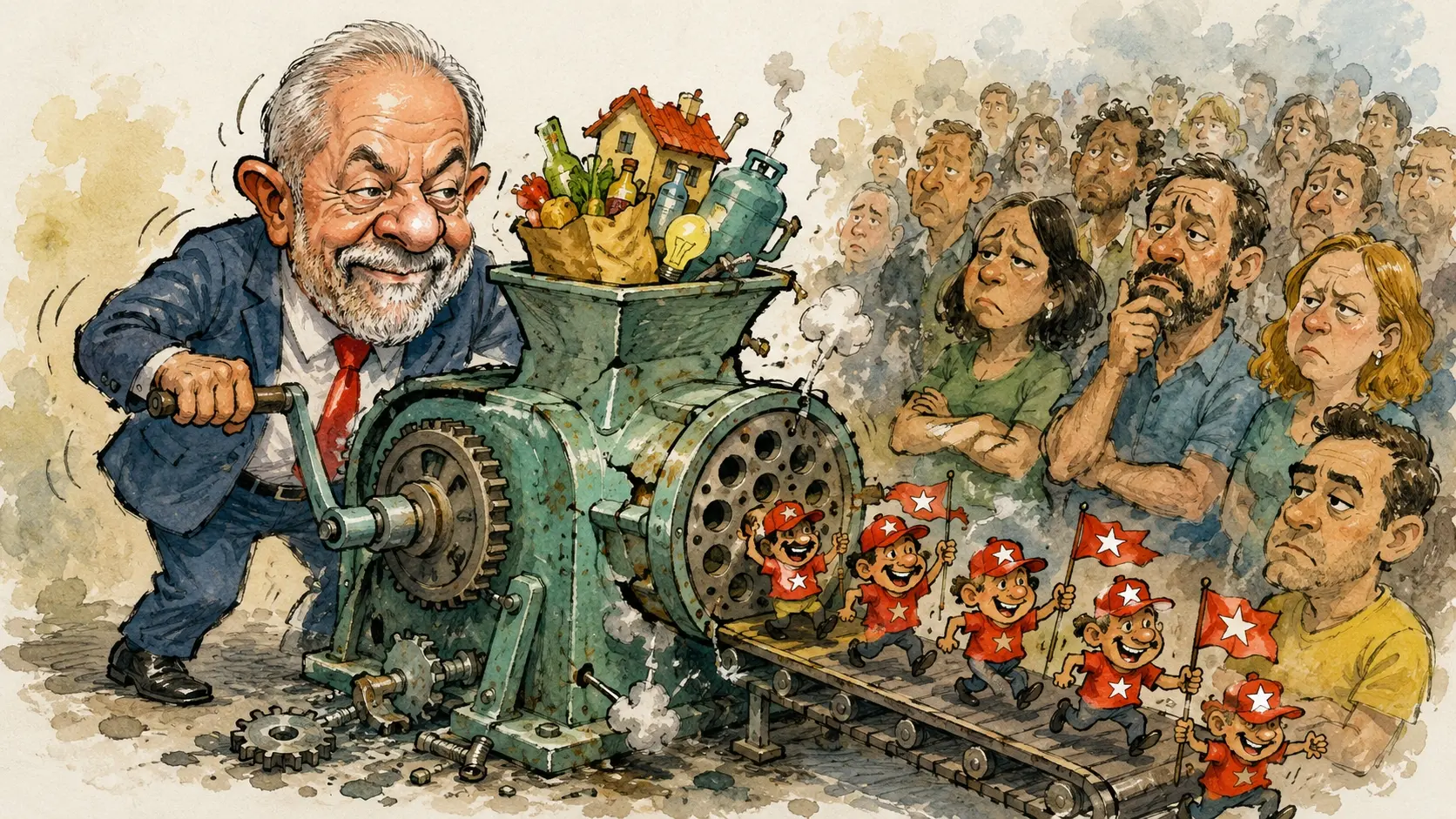
President Luiz Inácio Lula da Silva is moving into Brazil’s 2026 election season with a familiar playbook: more credit, more subsidies and more targeted benefits. The question is whether the strategy that helped the Workers’ Party (PT), Lula’s center-left party, dominate much of the past two decades still works in a changed electorate.
Since 2002, the PT has won five of Brazil’s six presidential elections. Lula won in 2002, 2006 and 2022; Dilma Rousseff, his chosen successor, won in 2010 and 2014. The party’s political model relied heavily on Bolsa Família, Brazil’s flagship cash-transfer program for low-income families, public-bank credit, tax breaks, real increases in the minimum wage and a larger state role in the economy.
A Costly Election-Year Push
Brazilian outlets report that Lula’s government has already announced about R$140 billion in economic stimulus measures for 2026, roughly USD 26 billion at recent exchange rates, citing a BTG Pactual survey. The measures include a new phase of Desenrola, a debt-renegotiation program; changes to private payroll loans; expanded income-tax exemptions; credit for truck drivers and housing; and energy-bill relief for low-income families.
Terra reported that the government also moved to eliminate the federal tax on low-value imported purchases, known in Brazil as the “taxa das blusinhas,” and announced new diesel and gasoline subsidies. Gazeta do Povo reported that fuel-price support alone has a gross estimated cost of R$35.14 billion, citing calculations by Warren Investimentos.
The government’s latest initiative, according to Gazeta do Povo, is Move Aplicativos, a credit program of up to R$30 billion, roughly USD 5.6 billion, for taxi and app-based drivers to buy new vehicles at lower interest rates. The Ministry of Finance told SBT News that the government’s economic agenda follows social demands and congressional approval, noting that dozens of economic bills have passed since Lula returned to office.
Polls Show Resistance
The political return is uncertain. A BTG/Nexus poll conducted from May 22 to 24, cited by Gazeta do Povo, showed Lula with 47% against 43% for Senator Flávio Bolsonaro of the Liberal Party (PL) in a possible second round, within the two-point margin of error. The same poll put Lula’s rejection at 47% among voters who said they would not vote for him “under any circumstances.”
Terra, citing a Genial/Quaest poll released May 13, reported a three-point rise in government approval from April and a two-point increase in Lula’s voting intention in a simulated scenario. The same report said half of respondents viewed Desenrola 2.0 positively, while 23% viewed it negatively.
Estadão columnist Sergio Denicoli, using data from AP Exata, argued that Lula remains competitive despite political wear. AP Exata’s tracking of social-media posts and polling sentiment showed the government’s negative rating falling from 48.9% in September 2025 to 43.8% in May 2026, while positive ratings rose from 25.8% to 33.2%.
A Changed Electorate
Analysts cited by Gazeta do Povo argue that Brazil’s electorate is less dependent on the older PT coalition of formal workers, welfare beneficiaries and state-linked economic groups. They point to social media, app-based work and generational turnover as forces that weakened the party’s ability to build long electoral hegemony.
Leonardo Barreto, of Think Policy, told Gazeta do Povo that the PT’s formula creates political loyalty through public resources but offers little sense of novelty. Alexandre Manoel, of Global Intelligence and Analytics, said younger voters did not live through the early Lula years as a period of personal optimism, making nostalgia less powerful.
The opposition has its own problem. Analysts cited by Terra and Estadão say Flávio Bolsonaro, son of former President Jair Bolsonaro, mobilizes the conservative base but carries high rejection and has yet to consolidate a broader message for independent voters. Terra reported that independents make up 32% of the electorate in the Genial/Quaest survey.
That leaves Brazil’s race open. Lula has not escaped rejection, and his fiscal strategy carries risks. But a fragmented opposition may still give him the one thing an incumbent most needs: the chance to present himself as the safer option.