
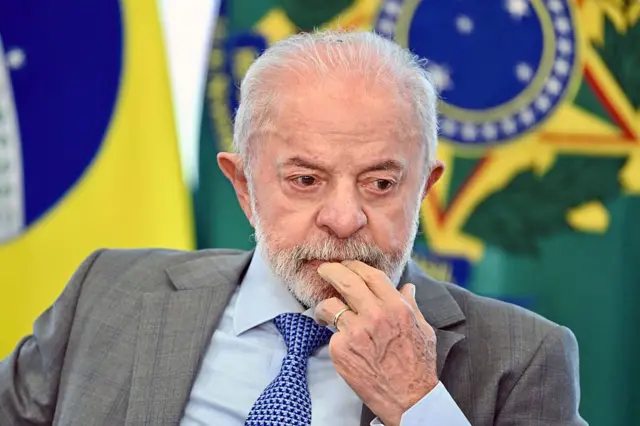
President Luiz Inácio Lula da Silva has sharply criticized a U.S. decision to classify Brazil’s two most powerful criminal factions, the Primeiro Comando da Capital (PCC) and Comando Vermelho, as international terrorist organizations, arguing that the move risks turning crime-fighting into a pretext for foreign interference.
The U.S. State Department announced the designation on May 28, according to BBC News Brasil, after more than a year of internal debate in Washington and diplomatic resistance from Brasília. The PCC, born in São Paulo’s prison system, and Comando Vermelho, rooted in Rio de Janeiro, are Brazil’s best-known organized-crime groups and operate in drug trafficking, arms trafficking and other transnational crimes.
Lula said he was “very sad” about the news and accused U.S. Secretary of State Marco Rubio of saying that Brazilian criminals were terrorists and that Americans could intervene. Speaking publicly on Friday, the president said Brazil would not accept being treated “like a banana republic” and argued that the proper response to organized crime was cooperation against money laundering, arms trafficking and fugitives abroad.
The dispute is also legal. Brazil’s government says domestic law distinguishes ordinary organized crime from terrorism, which it links to ideological, political or religious motives. In a formal statement cited by Brasil Paralelo, the government said the PCC and Comando Vermelho spread terror in Brazilian communities but do so for profit, especially through drugs and weapons, rather than for the purposes normally associated with international terrorism.
Brasília also warned that unilateral foreign measures could weaken police intelligence-sharing, create risks for civilians and affect Brazil’s financial system, including banks and digital-payment infrastructure. The government said it had proposed to the U.S. State Department on April 16 a cooperation agenda focused on intelligence, international coordination, money laundering abroad and weapons sent to Brazil.
The decision carries an unmistakable political dimension. BBC News Brasil reported that Lula’s government saw the designation as a victory for the political group led by Senator Flávio Bolsonaro, son of former president Jair Bolsonaro and a presidential hopeful for 2026. Flávio had just visited Washington, where he met President Donald Trump, Vice President J.D. Vance and Rubio, and said he had urged them to classify the Brazilian factions as terrorist groups.
Lula accused Flávio, without naming him directly in part of his remarks, of betraying Brazil by asking the United States to intervene in Brazilian affairs. Flávio and his allies, meanwhile, have argued that the Lula administration’s opposition to the designation shows weakness or complacency toward organized crime.
The U.S. had already used sanctions tools against Brazilian organized crime: in 2021, the U.S. Treasury designated the PCC in a way that allowed sanctions against members and companies linked to it. But the newer terrorism classification is more politically explosive because Brazilian officials fear it could justify broader action by Washington and complicate relations between the two governments.
For Lula, the challenge is to reject what he calls an attack on sovereignty without appearing soft on criminal groups that terrorize poor communities and project power across borders. For his opponents, the U.S. decision offers a campaign argument on public security, one of Brazil’s most sensitive issues ahead of the 2026 election.