


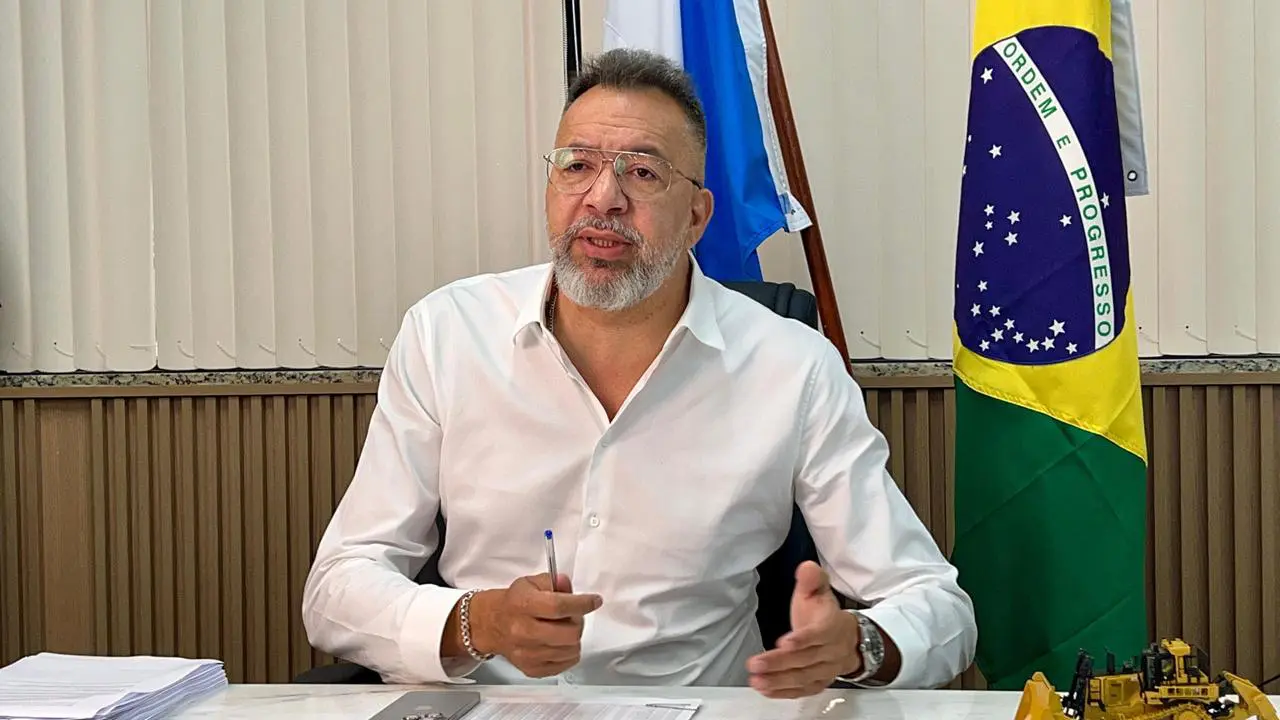
Brazilian Supreme Federal Court (STF) Justice Alexandre de Moraes granted provisional release to Márcio Canella, the former mayor of Belford Roxo in Rio de Janeiro state and a Senate pre-candidate for União Brasil, after his arrest during a Federal Police operation.
The decision, issued Friday, July 10, replaced jail with precautionary measures, including electronic ankle monitoring. The case is based on single-source reporting from Revista Oeste.
What the Police Found
Federal Police arrested Canella on Tuesday, July 7, while carrying out a search-and-seizure warrant in the sixth phase of Operation Unha e Carne. The operation investigates alleged money laundering through a network of fuel stations.
According to the Federal Police account cited by Revista Oeste, agents found a rifle inside a vehicle owned by the former mayor. Canella was booked in the act for possession of a restricted-use firearm.
A custody hearing initially kept him in jail, and he was transferred to the Pedrolino Werling de Oliveira prison, known as Bangu 8, in the Gericinó prison complex in western Rio de Janeiro.
Conditions of Release
Moraes said questions remain about the legal status of the rifle found in Canella’s vehicle. The defense argues that the weapon belongs to military police officer Alexandre Paixão da Silva Júnior, who was responsible for Canella’s escort. According to the case file described by Revista Oeste, the officer confirmed that version during the search.
Under Moraes’s order, Canella must remain at home at night and on weekends, report weekly to Rio de Janeiro’s criminal enforcement court, surrender his passport and wear an electronic monitor. The justice also ordered the immediate suspension of any firearm permits or registration certificates in the names of the investigated men.
Moraes also granted provisional release to military police officer Antônio Gomes da Silva Neto, who was arrested in the same operation. Federal Police said he provided private security services to targets of the investigation and was found with three firearms, ammunition, a cellphone and R$9,000 in cash.
The Broader Probe
Operation Unha e Carne examines what investigators describe as a criminal organization linked to money laundering through fuel stations. The inquiry began with a Financial Intelligence Report from Brazil’s Financial Activities Control Council (Coaf), which flagged about R$8 billion, roughly USD 1.5 billion at recent rates, in transactions over six years.
Moraes ordered Rio de Janeiro’s Military Police to provide, within five days, explanations about the seized weapons and the employment status of officers Alexandre Paixão da Silva Júnior and Antônio Gomes da Silva Neto.
The justice warned that failure to comply with the court-ordered restrictions could lead to preventive detention, the Brazilian legal mechanism that allows a suspect to be jailed before trial under specific conditions.