


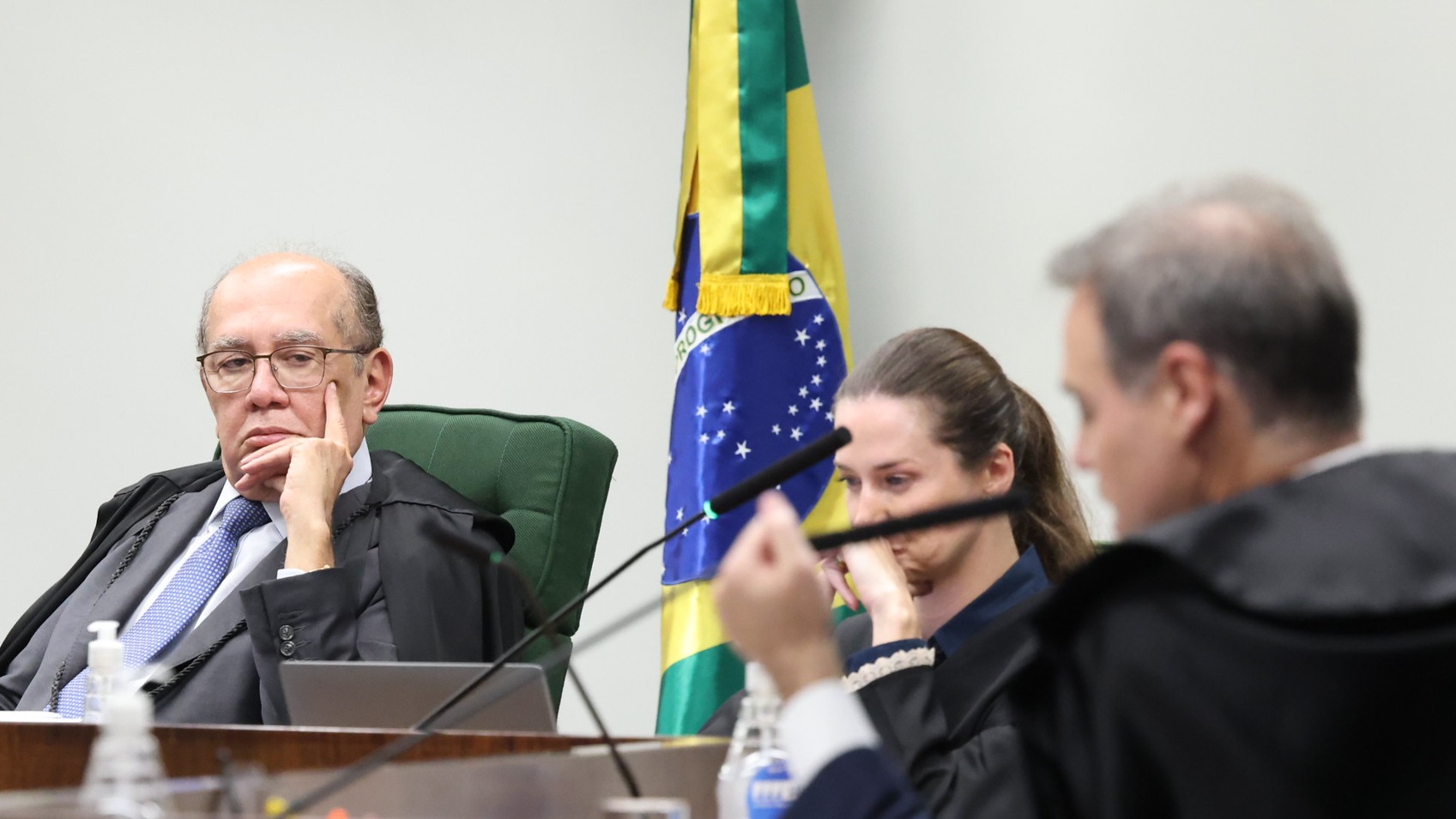
A dispute inside Brazil’s Supreme Federal Court (STF) has widened over the Banco Master investigation, placing Justice André Mendonça, the case’s rapporteur, against Justice Gilmar Mendes, the court’s longest-serving member. The clash centers on preventive detentions, plea-bargain talks, police access to phone data and the limits of public comments by judges.
The investigation, known as Operation Compliance Zero, examines alleged multibillion-real financial fraud, corruption of public officials and a protection network around former banker Daniel Vorcaro, founder of Banco Master. Vorcaro has been in preventive custody since March 4, according to CNN Brasil, after earlier arrests and court measures tied to the bank’s collapse.
Detentions Upheld
On June 16, the STF’s Second Panel upheld the preventive detention of Henrique Vorcaro, Daniel’s father, and Felipe Vorcaro, his cousin. Mendonça voted to keep them in custody and was joined by Luiz Fux and Nunes Marques. Gilmar Mendes voted to release them under restrictions, including electronic monitoring, according to Gazeta do Povo and O Globo.
Mendes argued that the case showed uncomfortable similarities with Operation Car Wash, the anti-corruption probe that began in 2014 and later faced judicial criticism over procedural abuses. He cited alleged selective leaks, family arrests and pressure for a plea bargain. He also questioned police reports that mentioned communications involving lawyers, saying that monitoring attorneys would be illicit.
Mendonça rejected that interpretation. He said the case was not about Car Wash but about what he described in court as a major financial fraud with alleged organized-crime features, including intimidation of witnesses, firearms and infiltration of police channels. Gazeta do Povo reported that he cited payments linked to Henrique Vorcaro and contacts with people allegedly tied to threats against former employees.
Plea Bargain Dispute
The plea-bargain issue became one of the sharpest points of conflict. Mendonça denied that he had ordered arrests to force Daniel Vorcaro into cooperation. He said any collaboration was a decision for the defense and claimed he had rejected an unnamed lawyer’s proposal for what he called a “selective” plea deal.
The Federal Police rejected a revised plea proposal from Vorcaro on June 10, according to CNN Brasil and Jornal do Brasil. Investigators considered the material insufficient. Jornal do Brasil reported that police saw the new version as an attempt to preserve allies, while the Prosecutor General’s Office was still analyzing the proposal at the time of its report.
On Roda Viva, a TV Cultura interview program, Mendes criticized Mendonça over the episode, calling it a “gross error” for a judge or rapporteur to be involved in plea-bargain discussions. Folha de S.Paulo reported that legal experts later said several of Mendes’s comments about pending cases and fellow judges appeared to violate Brazil’s Law on the Judiciary, which restricts judges from giving opinions on cases still under judgment outside formal proceedings.
Phones and Leaks
Phone data has become another contested front. Poder360 reported, citing Federal Police material made public by Mendonça, that Vorcaro received a document in July 2024 about a confidential investigation into a R$ 500 million transaction involving Caixa Asset and Banco Master two days after a federal prosecutor’s office action. The message was allegedly sent by Luiz Phillipi Mourão, known as Sicário, described by police as someone paid to obtain illicit information.
The same report said police asked whether access to the document came from a cyberattack or from a public servant. It also reported that, one month earlier, Mourão asked Vorcaro to confirm a list of people whose sealed proceedings should be monitored; Vorcaro allegedly replied that all should be checked.
Separately, Brasil247, citing R7 columnist Natália Martins, reported that Federal Police began extracting data from a second Vorcaro phone on June 22. Eight phones had been seized since his first arrest in November 2025, and only one had previously been accessed. Six devices reportedly remained under technical analysis.
Court Exposure
The case has also intensified debate over the STF’s public image. Poder360 reported that Mendes gave at least 11 interviews between April 19 and June 19, a period marked by criticism of the court, questions about links between justices and Banco Master, and pressure for a judicial conduct code.
O Globo reported that the Master case has changed the balance inside the STF’s Second Panel, giving Mendonça a working majority in recent decisions while leaving Mendes defeated on the detention issue. The paper also noted that the alignment is not automatic and that future disputes may still split the panel.
For international readers, the institutional stakes are specific to Brazil’s judiciary: the STF is both a constitutional court and, in cases involving officials with special jurisdiction, a criminal forum. That design gives its justices unusual public visibility. The Master case now tests not only a financial-crime investigation, but also how much Brazil’s top judges should say outside the case files while they may still be called to rule on them.