


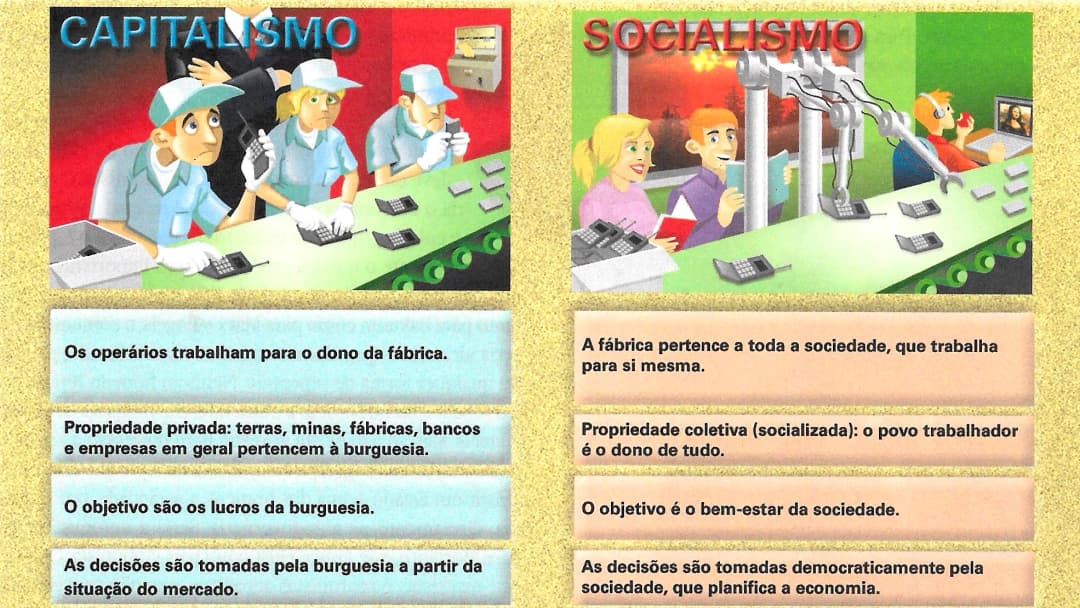
A long-running dispute over ideology in Brazilian classrooms has resurfaced around Nova História Crítica, a history textbook collection by Mario Schmidt that was once among the most widely adopted in the country’s public-school system.
According to reporting cited by Brasil Paralelo and material reproduced by Observatório da Imprensa, the controversy peaked in 2007 after journalist Ali Kamel published excerpts from the eighth-grade volume in O Globo, arguing that the book portrayed socialism in favorable terms while treating capitalism more negatively. Among the passages highlighted were descriptions of Mao Zedong as a "great statesman and military commander," sympathetic treatment of aspects of the Cuban Revolution, and language suggesting private property increases selfishness and social isolation.
At the time, the collection had already reached a large national audience through Brazil’s federal textbook distribution system. Brasil Paralelo, citing a 2007 Estado de S. Paulo report, said more than 20 million students had used the work over a decade and that it had represented roughly 30% of history textbook selections when purchased by the Education Ministry.
The case quickly turned into a broader political and pedagogical fight. Kamel argued that the material amounted to ideological indoctrination and said students were being exposed to a one-sided interpretation of 20th-century socialism. In the text republished by Observatório da Imprensa, he accused the book of presenting communist experiences in overly favorable terms while downplaying repression, economic failure and mass violence under regimes such as Maoist China and the Soviet Union.
Schmidt and his publisher rejected that characterization. In their response, also reproduced by Observatório da Imprensa, they argued that Kamel had selected excerpts without context and ignored passages explicitly critical of Stalinism, Mao and authoritarian rule in the Soviet bloc. They said the purpose of the collection was to stimulate critical thinking rather than impose a political line.
The dispute also exposed how Brazil’s national textbook selection process worked. According to journalist Luis Nassif, writing at the time and republished by Observatório da Imprensa, the federal government did not directly choose individual titles for classroom use. Instead, university-based evaluators reviewed anonymized submissions, the Education Ministry compiled an approved guide, and public-school teachers made the final selection. Nassif said the Schmidt collection had entered the federal list in 2002, under President Fernando Henrique Cardoso’s administration, and was later removed in 2007 after a new evaluation during Luiz Inácio Lula da Silva’s first term.
Brasil Paralelo says the Education Ministry later cited "conceptual error," "methodological incoherence" and "ideological indoctrination" in rejecting the collection, and that it was withdrawn from the textbook program in 2008. Critics of the rejection, however, noted that the work had previously passed federal review more than once and argued that ideological framing was not unique to one author or one collection.
The episode remains a reference point in Brazil’s recurring arguments over whether school materials should emphasize social critique, civic formation or ideological neutrality. Nearly two decades later, the Schmidt case still serves as a shorthand for a larger national divide over who gets to define historical interpretation in the classroom, and where pedagogy ends and political persuasion begins.
Sources: Brasil Paralelo; Observatório da Imprensa, including reproduced texts by Ali Kamel, Mario Schmidt, Editora Nova Geração and Luis Nassif.