


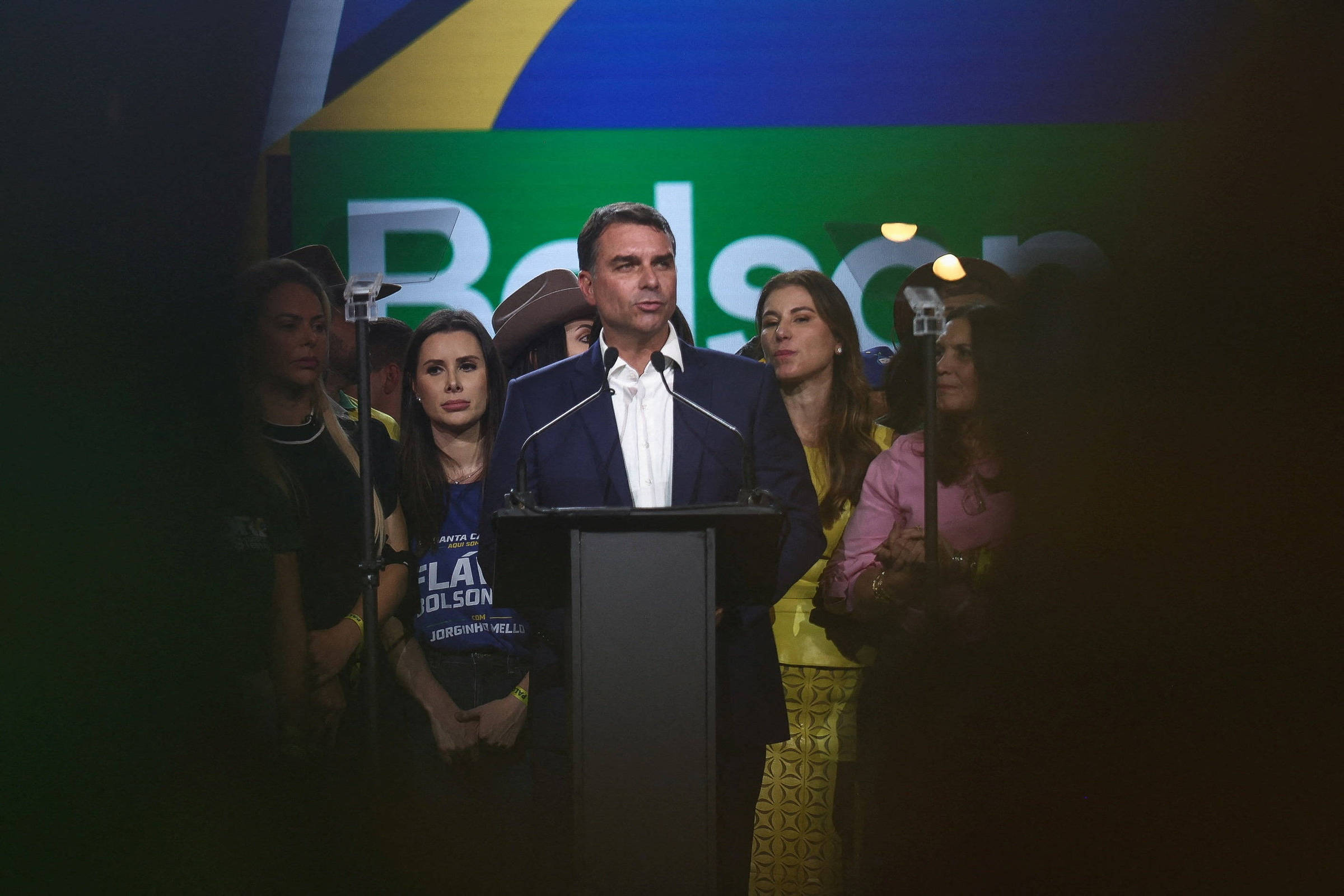
Brazilian Senator Flávio Bolsonaro has approved a proposal to create a campaign council with political allies and representatives from outside his formal party base, according to single-source reporting by Folha de S.Paulo.
The proposed council would include politicians from parties that are not expected to formally endorse his candidacy, as well as business leaders, lawyers and representatives of civil society. The idea is intended to demonstrate that Flávio has access to a broader political network than a formal coalition agreement might suggest.
Countering Isolation Claims
Flávio, a member of the PL party, faces the prospect of running without allied parties formally joining his ticket. Folha reported that this possibility has led to claims that he is politically isolated.
The senator’s allies believe the council could provide a response to that criticism. By bringing together figures from different sectors and political groups, they want to show that he can maintain dialogue beyond the party structure supporting his candidacy.
The proposal does not necessarily mean that the participating parties will formally back Flávio. Instead, it would create a platform for allies and other influential figures to associate themselves with his campaign while maintaining the formal neutrality of their parties.
Parties Weigh Neutrality
Several parties that could be considered natural allies are tending toward neutrality, according to the report. They include Republicanos, Podemos and the federation formed by União Brasil and PP.
In Brazil, party support can influence a candidate’s access to political networks and campaign resources, but parties may also avoid formally committing themselves when an election remains unsettled. The source does not report that any of the parties listed has endorsed the council or agreed to support Flávio’s candidacy.
The proposal therefore appears designed as a political message as much as an organizational structure. It would allow the campaign to point to relationships with politicians and civic representatives even if major party alliances do not materialize.
Contrast With Lula
Flávio’s allies also want to present him as open to dialogue. They intend to contrast that image with President Luiz Inácio Lula da Silva, who leads the Workers’ Party and is described by the allies as surrounding himself with the political left.
That comparison is a campaign argument attributed to Flávio’s allies, not an independently established assessment in the report. The available information does not indicate how the proposed council would be structured, who would serve on it or when it would begin operating.