


Brazil’s federal government will extend the current concession for the Ferrovia Centro-Atlântica, known as FCA, for up to two years after failing to complete negotiations for an early renewal before the contract expires on August 31, according to Folha de S.Paulo.
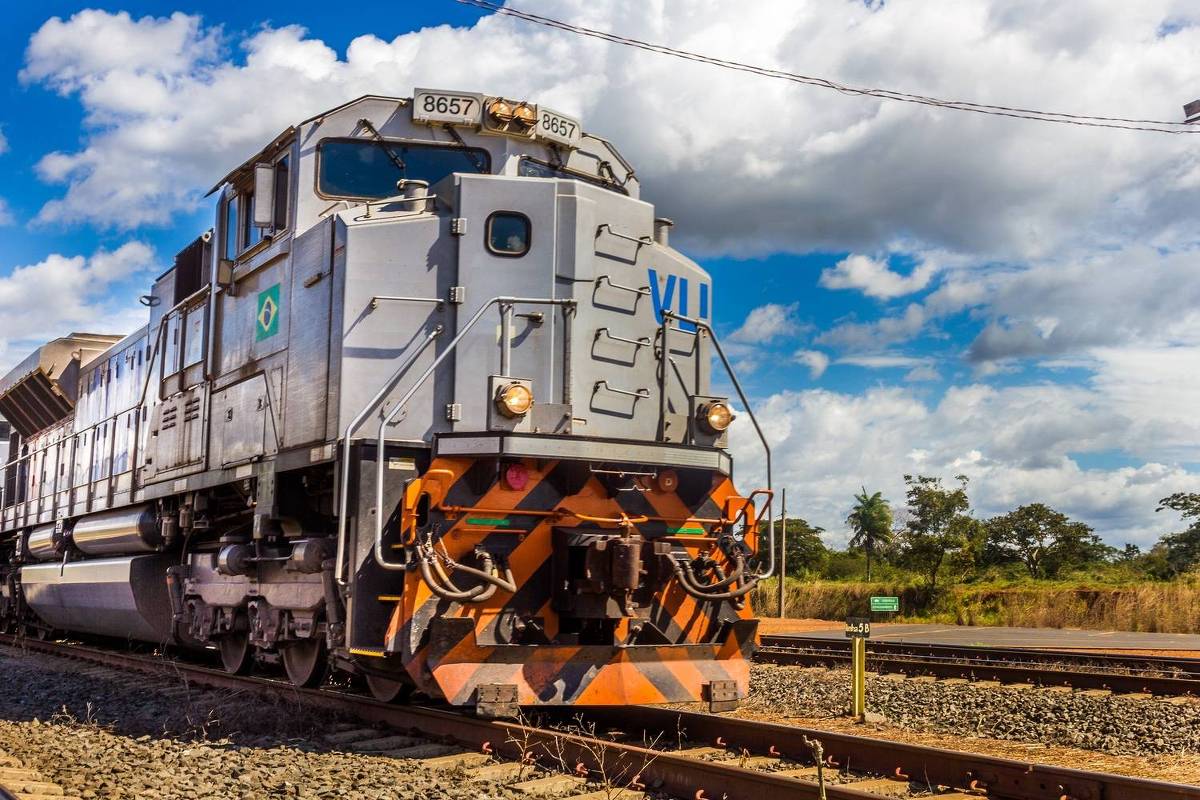
FCA is operated by VLI, a Brazilian logistics company. The temporary extension is meant to avoid an interruption in service across the rail network while the government, regulators and the Federal Court of Accounts, Brazil’s public-spending watchdog, examine a new concession contract that would keep the railway under private management for another 30 years.
VLI confirmed the extension to Folha. The company said the existing contract would be prolonged for up to two years to guarantee continuity while the renewal process moves through regulatory bodies and the Federal Court of Accounts. It also said the new contract, once approved, would lead to billions of reais in investments for track modernization, new wagons and locomotives, and urban mobility works.
Folha said Brazil’s Ministry of Transport and ANTT, the national land transport regulator, did not respond before publication.
The stopgap solution had been under consideration since January, when Folha reported that the government was studying an addendum to prevent the concession from expiring before a definitive renewal was ready. At the time, the extension was described as a fallback option. It has now become the chosen path because the administration cannot complete all required steps before the end of August.
The FCA renewal is one of the most complex railway negotiations now handled by the Ministry of Transport, according to Folha. The talks include a new 30-year operating period, the return to the government of more than 3,100 kilometers of abandoned or economically unviable track, mandatory new investments, and urban mobility projects.
Folha reported that the proposed long-term contract includes an unusual financial structure. VLI would have 2.39% of the railway’s gross operating revenue retained in a linked account throughout the concession period. The company would also pay more than R$1.1 billion as financial consideration for the renewal.
The delay has drawn criticism from business leaders and industrial representatives in Bahia, a northeastern state whose logistics network depends heavily on rail access. Fieb, Bahia’s state industry federation, commissioned a study arguing that the state’s rail network has deteriorated over a long period and that this has hurt the local economy.
According to the federation, the Salvador metropolitan region faces what it called clear logistical isolation because of the condition of the old Bahia rail network under FCA. Fieb said the situation led to the loss of customers because of irregular, unsafe and poor-quality service.
Fieb described a two-year extension as extremely damaging to Bahia’s economy because it would not require immediate investment in the rail business. The federation called it the worst alternative and a serious blow to the state economy.
This article is based on single-source reporting from Folha de S.Paulo.