


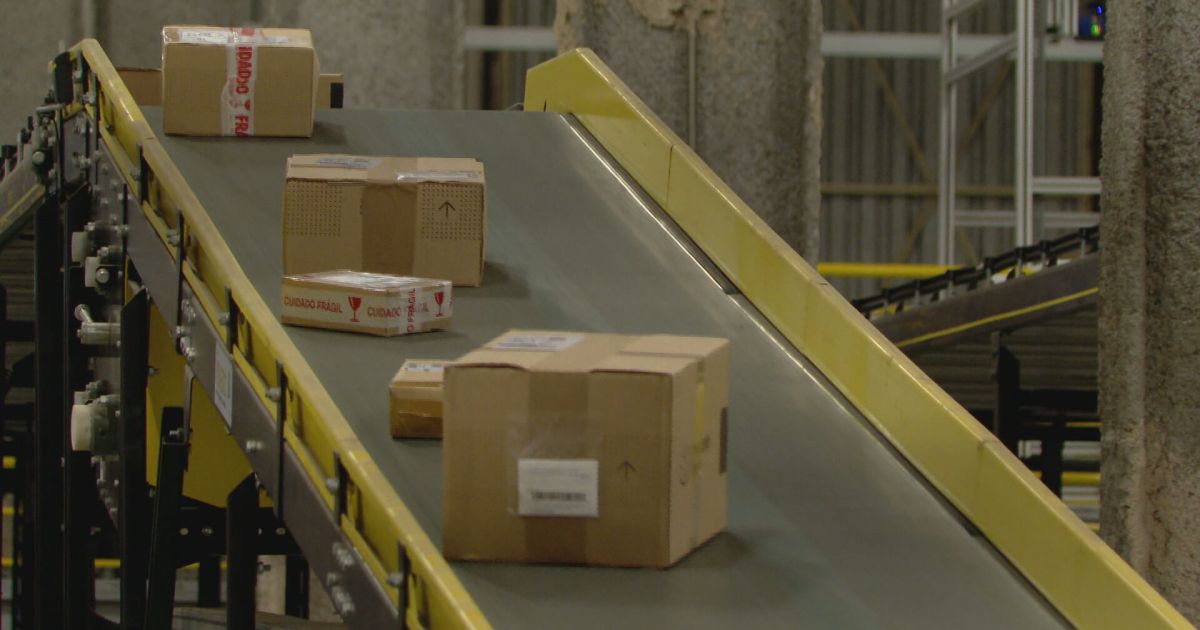
Small online purchases shipped from abroad to Brazil reached R$2.6 billion in June, the highest monthly total recorded by the Federal Revenue Service since it began publishing monthly data for the Remessa Conforme customs program, according to CNN Brasil.
The jump came after President Luiz Inacio Lula da Silva, of the left-wing Workers’ Party, signed a provisional measure in May eliminating the federal import tax known in Brazil as the “taxa das blusinhas,” or “little blouse tax.” The nickname refers to low-cost fashion and consumer goods bought from foreign e-commerce platforms.
Under the rule introduced in August 2024, Brazil charged a 20% federal import tax on purchases of up to $50 and 60% on items between $50.01 and $3,000. Lula’s measure zeroed the 20% tax for lower-value purchases, while state taxes collected under the Remessa Conforme system remained part of the process.
CNN Brasil reported that small-parcel imports rose almost 30% in May, the month in which the tax was removed, and about 37% in June. The June total was below only two earlier two-month totals in the tax authority’s series: R$2.69 billion for April and May 2024, and R$3.13 billion for June and July 2024.
Remessa Conforme is a Federal Revenue program designed to speed up customs clearance for foreign online purchases. Participating companies collect applicable taxes at checkout, including state taxes, which allows customs processing to begin earlier and can reduce delivery times for consumers.
The policy has proved popular with shoppers but has drawn strong opposition from Brazilian business groups and industry associations. According to CNN Brasil, private-sector groups lobbied against ending the tax and asked Congress to return Lula’s provisional measure.
In a joint manifesto cited by CNN Brasil, business entities argued that removing the federal levy widens the gap between companies operating in Brazil and foreign competitors. They said Brazilian firms face domestic tax, labor, environmental and consumer-protection rules, while international platforms can operate with lower costs.
“Defending tax equality does not mean defending privileges,” the groups said, according to CNN Brasil. “It means ensuring that all economic agents are subject to the same rules and contribute equivalently to the country’s development.” The manifesto summed up the demand as: “If it is lowered for foreigners, it must be lowered for Brazilians.”
Fiesp, the Federation of Industries of the State of Sao Paulo, said the measure, if maintained, would create unfair competition, destroy jobs in Brazil and undermine the national economy.
The dispute places Lula’s government between two political pressures: consumers who benefit from cheaper imported goods and domestic industries that say tax relief for foreign platforms leaves Brazilian businesses at a structural disadvantage. This article is based on single-source reporting from CNN Brasil.