


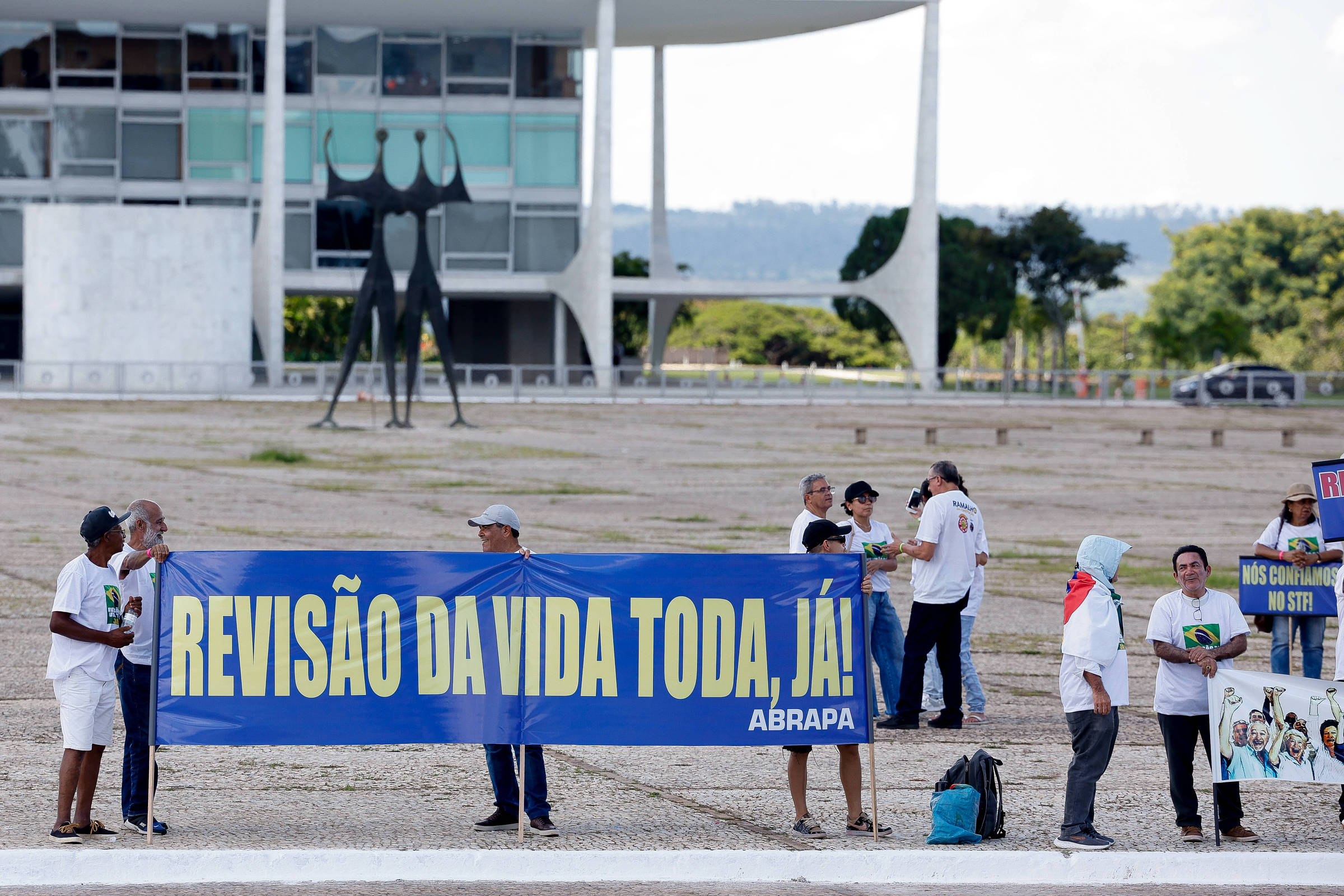
Brazil’s Supreme Court has effectively ended a years-long legal fight over whether some retirees could have their public pensions recalculated to include older contributions made before the country adopted the real as its currency in July 1994.
The case, known in Brazil as the “whole-life review” of INSS pensions, reached its final stage after the court recorded the end of the last appeal in one of the proceedings challenging the current calculation rule, according to Folha de S.Paulo. The INSS is Brazil’s National Social Security Institute, which administers public pensions and other benefits.
This is single-source reporting based on Folha de S.Paulo, which cited pension lawyers and court developments.
The decision means retirees whose benefits were affected by a 1999 pension reform no longer have a viable path to seek this type of correction in court, lawyers told the newspaper. Cases that had been suspended in lower courts are expected to resume only so judges can reject the claims and close the proceedings.
The dispute centered on a transitional rule created by Law 9,876 of 1999, during the government of President Fernando Henrique Cardoso. For workers already contributing to the pension system, the rule used only contributions made from July 1994 onward, after the launch of the Plano Real, Brazil’s anti-inflation stabilization plan. Newer contributors were treated under different rules. Retirees who had higher earnings before July 1994 argued that excluding those older wages unfairly reduced their pensions.
The “whole-life review” would have allowed those older contributions, made under previous currencies, to enter the benefit calculation. The thesis had won support in the Superior Court of Justice and was approved by the Supreme Court in December 2022. But the court later undercut that result through separate constitutional cases over the 1999 law and the so-called fator previdenciário, a formula designed to reduce pension values and encourage workers to remain longer in the labor market.
In March 2024, the Supreme Court held in ADIs 2,110 and 2,111 that Article 3 of Law 9,876/1999 is constitutional and mandatory. The final procedural step in ADI 2,111 was published on July 9, 2026, Folha reported.
The financial stakes were heavily disputed. Federal government lawyers and the Attorney General’s Office argued that allowing the review could cost 480 billion reais if applied broadly to pensions since 1999 and related survivor benefits. Ieprev, a pension studies institute, estimated a much smaller cost of 3 billion reais over ten years, based on existing court cases.
For retirees who had already received higher payments through court orders, the consequences depend on the procedural stage and timing of each case. The Supreme Court has already defined that beneficiaries do not have to return higher pension amounts received before April 5, 2024, the date when the judgment record overturning the review was published. They also will not have to pay court costs, government attorney fees or expert fees up to that date.
But the INSS may reduce benefits back to their previous level, adjusted by the regular inflation increases that would have applied. Lawyers told Folha the agency has already begun cutting some pensions that had been increased under the review.
Retirees who received increases after April 5, 2024 may face a higher risk that the INSS seeks repayment, depending on the case. Those with final, unappealable judgments have greater legal security, but lawyers cautioned that each file must be examined individually.
Pension lawyer Adriane Bramante, a member of the São Paulo bar association’s pension law commission, told Folha there is no longer a way to reverse the Supreme Court’s position. João Badari, of Aith, Badari e Luchin, said a further clarification appeal could theoretically be filed but would likely be treated as an attempt to delay the end of the case. Rômulo Saraiva, a pension lawyer and Folha columnist, said retirees should check whether any INSS recalculation or charge exceeds what is legally permitted, because administrative errors remain possible.